
You have heard local SEO brings customers, but every guide you open drowns you in jargon: citations, schema, NAP, prominence. Where does a normal business owner actually start?
Right here. This guide strips local SEO down to the steps that matter, in the order that matters, with zero fluff. Follow it once to build your foundation, then keep a tiny monthly routine to stay visible. No agency required to begin.
The short answer: To do local SEO as a beginner: claim and complete your Google Business Profile, keep your business name, address, and phone identical everywhere online, build a simple system for collecting reviews, target local keywords on your website, and maintain a small monthly routine of posts, photos, and review replies.
What Do You Need Before Starting?
Less than you think. You need a real business serving a real area, a phone number you answer, and a few hours for setup. You do not need a perfect website, paid tools, or technical skills. Most of local SEO happens on Google’s own free platforms.
Do I need a website at all? It helps a lot, but it is not step one. Your Google Business Profile can rank in the Map Pack on its own. That said, a simple website with your services, area, and contact info multiplies everything else. If you have one, great. If not, start with the profile and add the site next.
Step 1: How Do You Claim Your Google Business Profile?
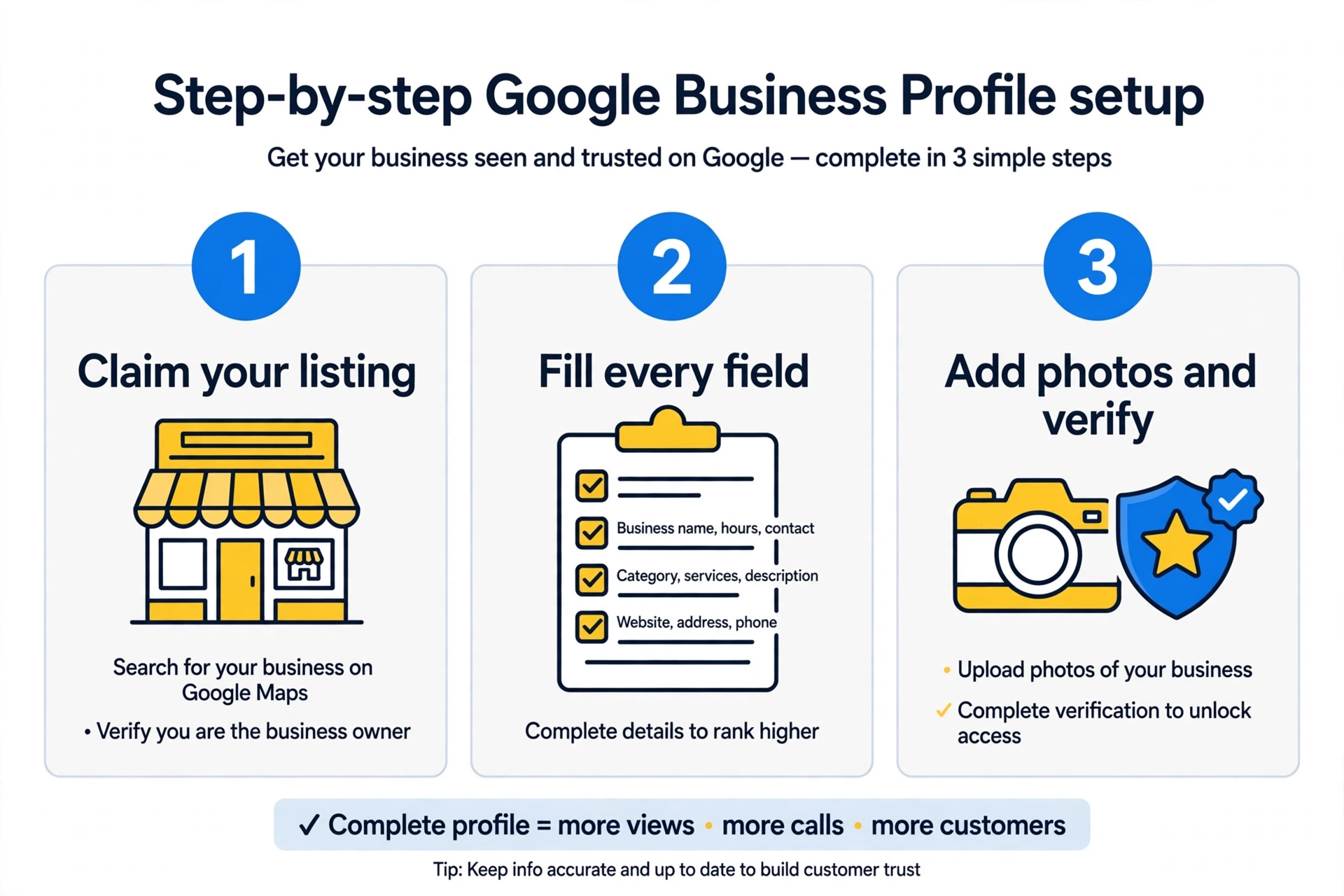
This is the foundation everything else stands on. Search for your business on Google. If a listing exists, claim it. If not, create one. Then verify ownership, usually by video, phone, or postcard. Verification unlocks editing, posting, and insights.
Once inside, complete every field: exact business name (no keyword stuffing), correct categories with the most specific primary category first, services, hours including holiday hours, phone, website, and a natural business description. Then upload at least five real photos: storefront, team, work in progress, finished results. Profiles with photos get dramatically more engagement than empty ones.
How long does verification take? Video or phone verification can finish the same day. Postcards take one to two weeks. Do not skip it; unverified profiles barely rank.
Step 2: How Do You Keep Business Info Consistent?
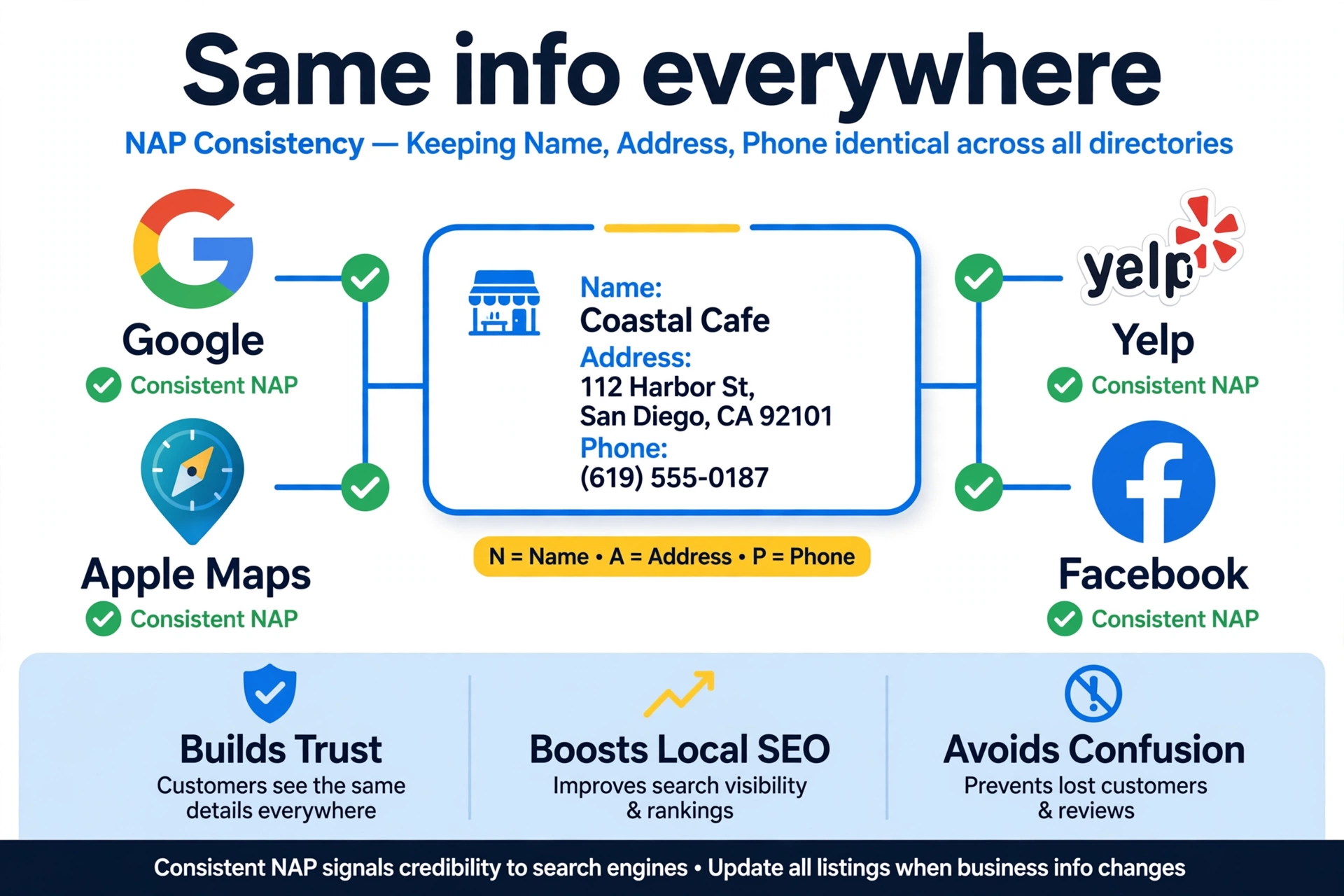
NAP stands for Name, Address, Phone. These three must be identical everywhere your business appears: your website footer, Facebook, Yelp, Apple Maps, Bing Places, and industry directories. “123 Main St” on one site and “123 Main Street” on another confuses Google’s matching and quietly costs you rankings.
Start with the big five: Google, your website, Facebook, Yelp, and Apple Maps. Then add Bing Places and two or three directories specific to your industry. Quality beats quantity; ten accurate listings outperform fifty sloppy ones. Check for duplicate listings of your business and get them removed.
Step 3: How Do You Get Your First Reviews?
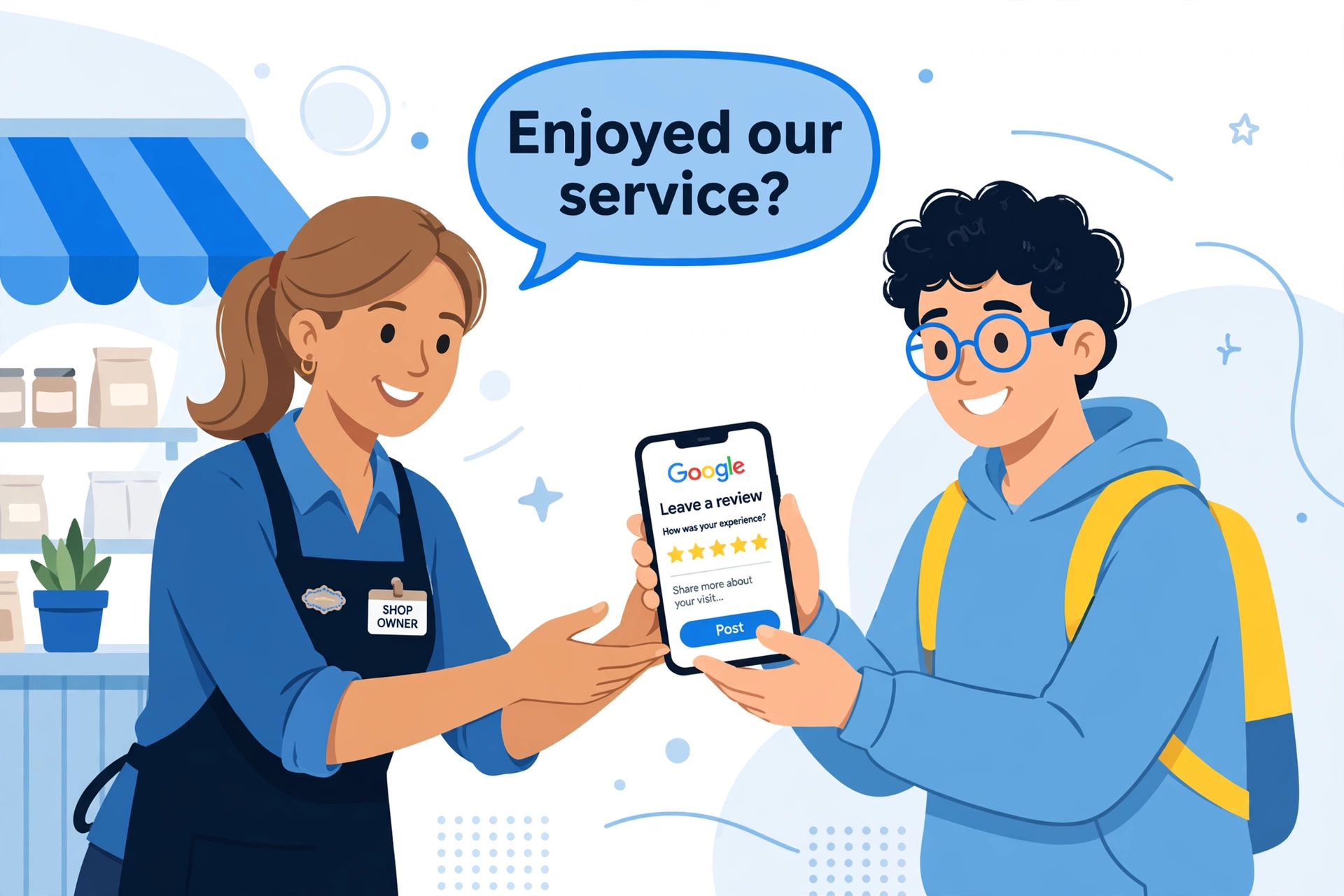
Reviews are the fuel of local SEO. They influence rankings directly and decide customers at a glance. The beginner system is simple: after every completed job or happy visit, send a polite request with your direct Google review link. Make it part of the process, not an occasional push.
Then respond to every review within a couple of days, good or bad. Thank happy customers by name. For negative reviews, stay calm, acknowledge the issue, and invite them to resolve it offline. Future customers read your replies more carefully than the reviews themselves.
How many reviews do I need to start? Five genuine reviews put you ahead of most competitors. Fifty makes you a local authority. Never buy reviews; Google’s spam detection has ended businesses over it.
Step 4: Which Keywords Should You Target?
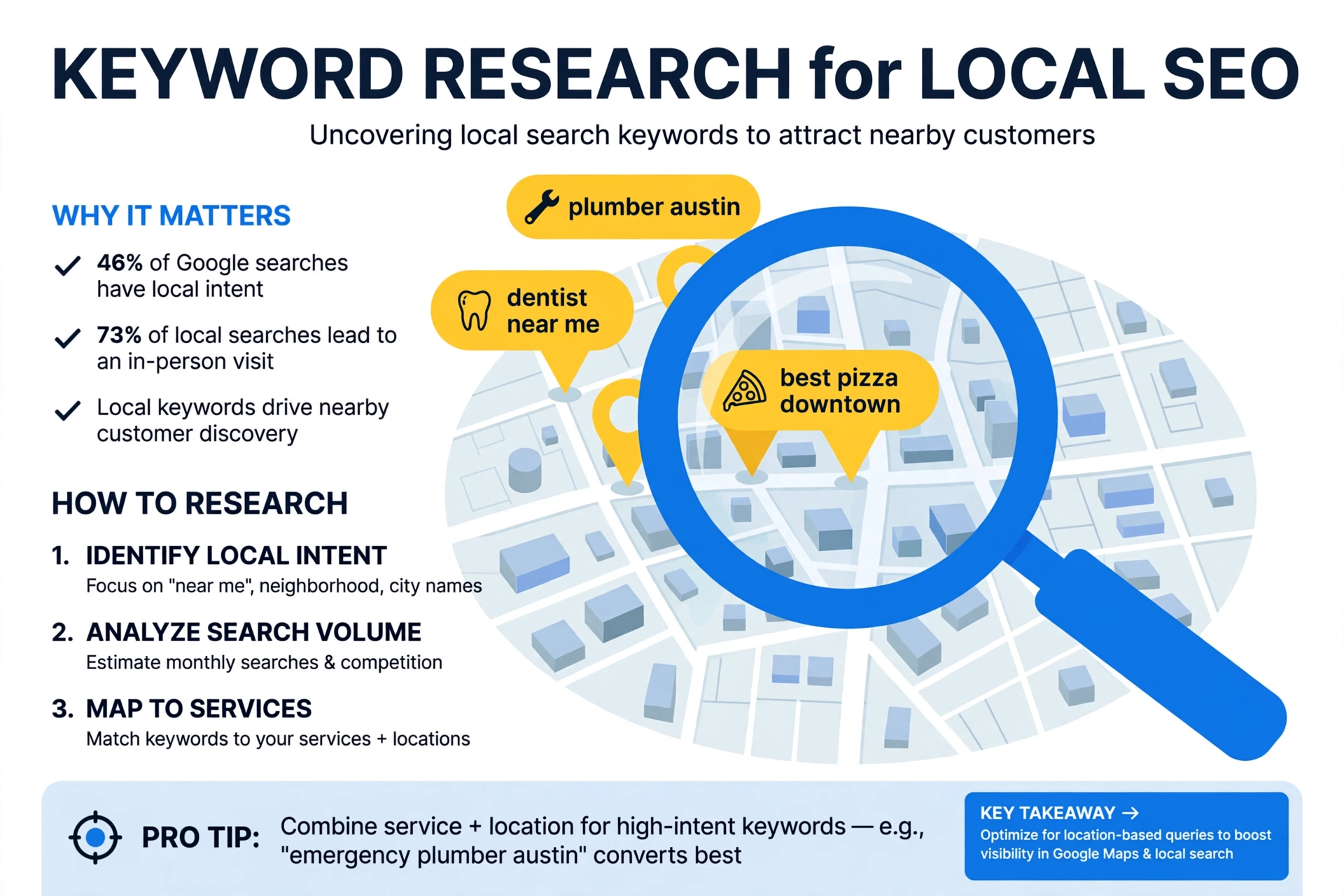
Local keywords are simply what your service is plus where you do it: “plumber in Austin,” “dentist near me,” “best pizza downtown.” You do not need fancy tools to start. Type your service into Google and note the autocomplete suggestions, the “People also ask” box, and the related searches at the bottom. Those are real customer phrases.
Use them naturally in your page titles, headings, and content. One service page per core offering beats one giant “services” page. If you serve multiple areas, give each important area its own page with genuine local detail, not copy-pasted text with the city name swapped.
Step 5: What Should Your Website Include?
Keep it focused. Every local business website needs: a homepage stating what you do and where, dedicated service pages, a contact page with your full address and an embedded Google Map, and your NAP in the footer of every page. Add LocalBusiness schema markup so Google reads your details precisely; most SEO plugins add this with a few clicks.
Two technical non-negotiables: the site must load fast on phones and work perfectly on small screens. Most local searches happen on mobile, and a slow site loses the exact customers your SEO earned. Our local SEO services include this technical foundation for businesses that want it handled.
What Is the Monthly Routine That Keeps It Working?
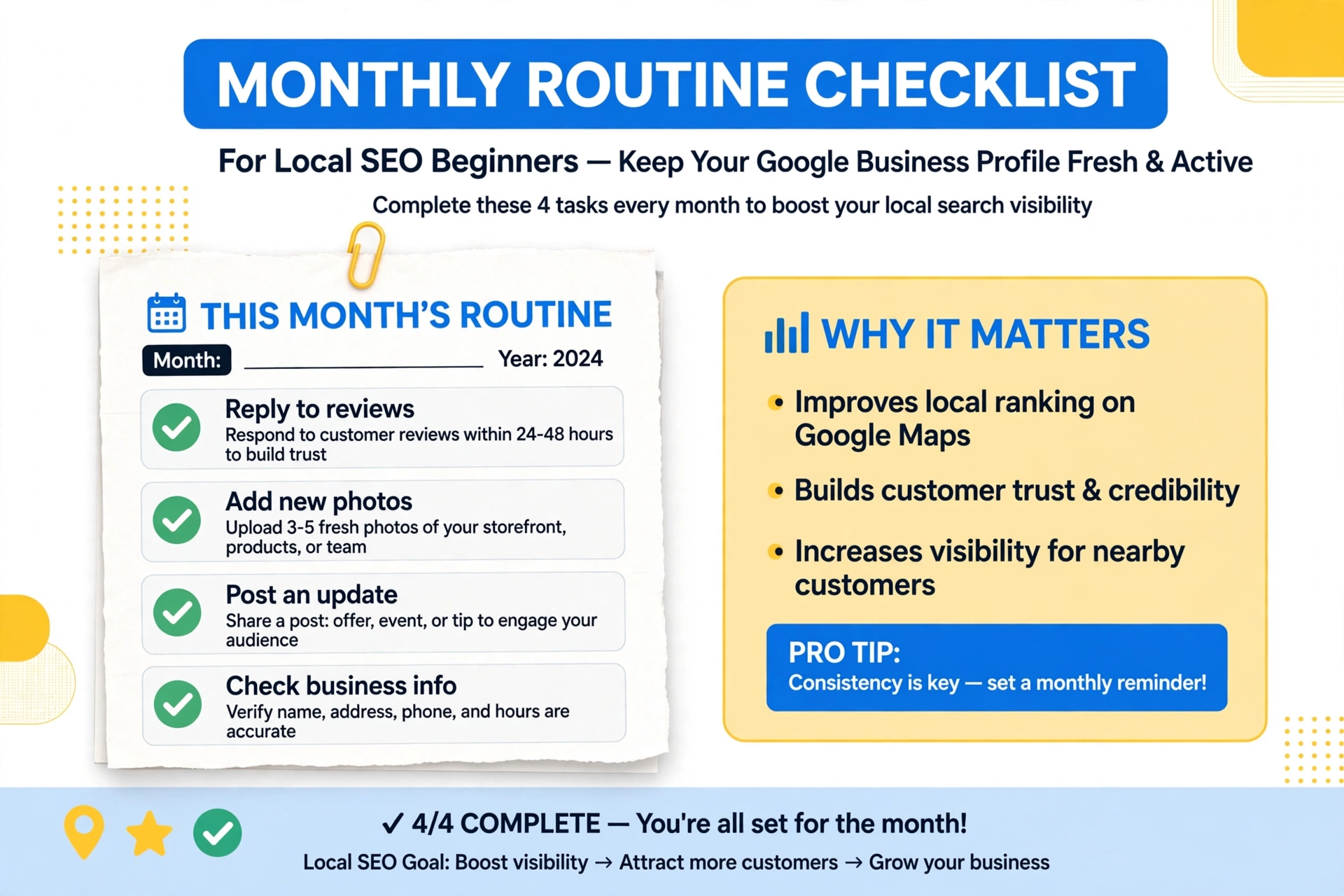
Local SEO is not set-and-forget. Google rewards active businesses. But the routine is tiny, about an hour a month:
- Weekly: reply to new reviews, check your profile for unwanted edits.
- Every two weeks: publish a profile post or offer, add new photos.
- Monthly: ask recent customers for reviews, check your rankings and profile insights, update hours for holidays.
- Quarterly: review NAP consistency across directories, look for local link opportunities, audit your website.
Small, consistent actions compound. The businesses dominating your local Map Pack are rarely doing anything exotic. They are just doing the basics every month while competitors do nothing.
What Mistakes Should Beginners Avoid?
- Keyword-stuffing your business name. “Best Cheap Plumber NYC” violates Google’s guidelines and can get your profile suspended. Use your real name.
- Ignoring reviews. Unanswered reviews signal a dormant business to Google and to customers.
- Inconsistent information. Different phone numbers or addresses across listings erode trust fast.
- Expecting overnight results. Profile fixes move things in weeks; real Map Pack movement takes three to six months.
- Buying fake reviews or links. Short-term bump, long-term disaster. Google’s 2026 spam enforcement is the strictest yet.
Two bookmarks worth keeping: Google’s SEO Starter Guide and Google’s Business Profile help center.
Where Should You Start Today?
Local SEO for beginners is five steps: claim your profile, keep your info consistent, collect reviews steadily, target local keywords, and keep a small monthly routine. None of it requires expertise, only consistency. Start today, and in a few months you will wonder why you waited. Local SEO Rankers exists for the day you want professionals to take it further.
Want the foundation done right from day one? Contact Local SEO Rankers for a free local SEO audit. We will check your profile, listings, and website, and hand you a clear action plan.
Still Have Questions About Local SEO Basics?
How long does beginner local SEO take to show results?
Earliest movement often appears within four to eight weeks of completing your profile and starting reviews. Meaningful Map Pack rankings typically take three to six months of steady effort.
Can I do local SEO myself without hiring anyone?
Yes. The fundamentals in this guide are fully DIY-able for most single-location businesses. Expect eight to twelve hours of initial setup, then a few hours a month. Very competitive markets may eventually need professional help.
Do I need a website for local SEO?
It strongly helps but is not step one. Your Google Business Profile can rank alone. A simple, fast, mobile-friendly website multiplies every other signal, so add one as soon as you can.
How many citations do beginners need?
Start with five to ten accurate listings on major platforms: Google, Facebook, Yelp, Apple Maps, Bing Places, plus two or three industry directories. Accuracy matters far more than count.
What is the biggest beginner mistake in local SEO?
Keyword-stuffing the business name on the Google Business Profile. It violates Google’s guidelines and risks suspension. The second biggest is setting everything up once and never touching it again.
Is local SEO free?
The core work costs nothing but time: claiming your profile, fixing listings, asking for reviews, and publishing content are all free. Paid tools and professional help speed things up but are not required to start.