
Your customers are writing your SEO for you. Every review they leave is fresh, keyword-rich content that Google reads as proof your business is real, trusted, and worth ranking.
Most businesses collect this feedback by accident. Smart ones turn it into a system: more reviews, better responses, and content built from real customer language. Here is exactly how to do it.
The short answer: Use customer feedback for local SEO by building a system that earns steady reviews, responding to every one, letting customers naturally mention your services and area, turning common questions into website content, and treating complaints as free business intelligence.
How Exactly Does Feedback Improve Local Rankings?
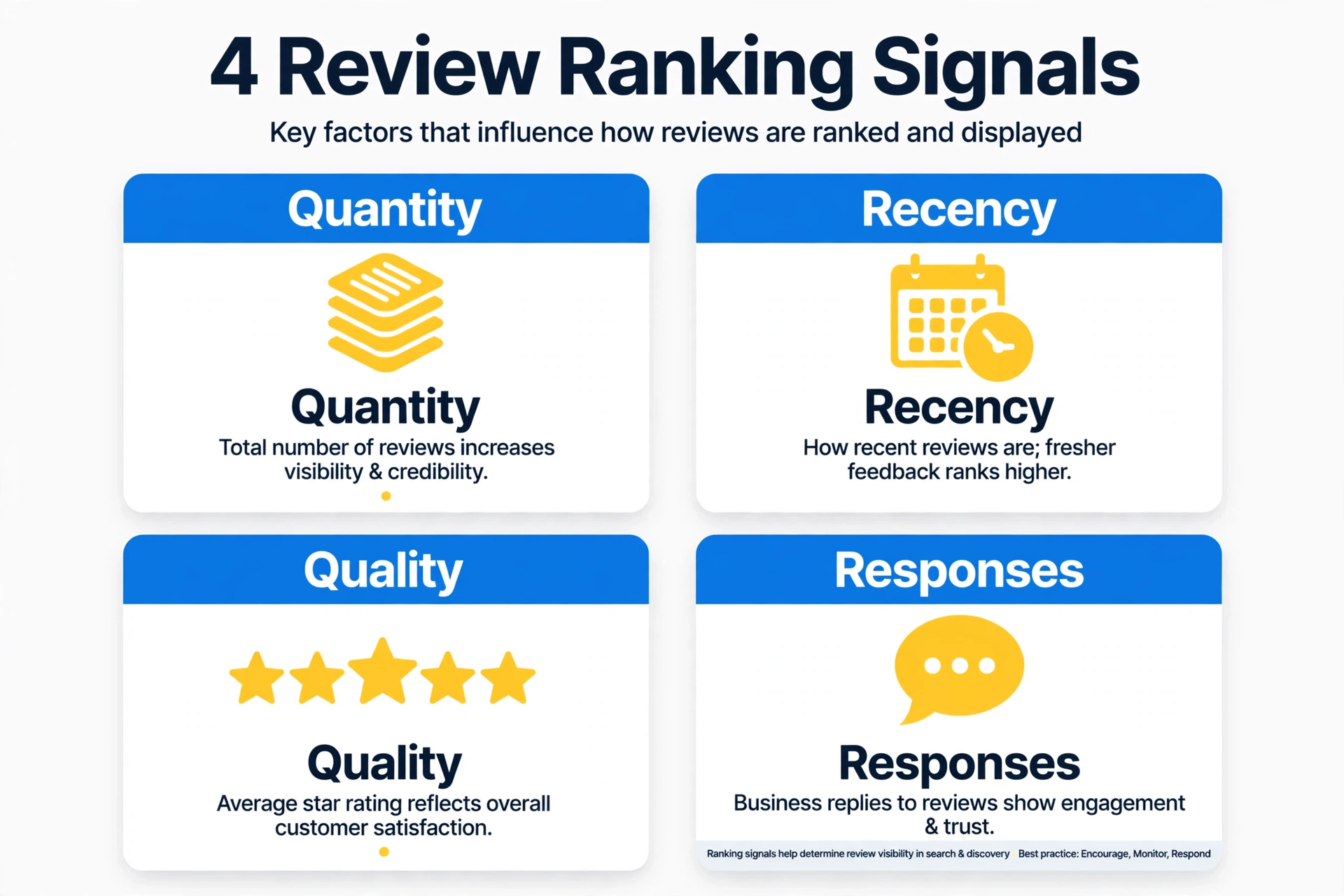
Google ranks local businesses on three things: relevance, distance, and prominence. Reviews feed prominence directly. Google has confirmed that high-quality, positive reviews improve visibility and help customers find you. But not all feedback signals work the same way:
- Quantity: total review count shows established trust. A business with 300 reviews outshines one with 30.
- Recency: a steady stream of fresh reviews beats a large pile from two years ago. Google reads uninterrupted review flow as proof of an active, patronized business.
- Quality: your average star rating shapes click behavior. Most customers filter out anything below 4 stars.
- Responses: owner replies signal an actively managed profile, which Google’s own documentation says shows you are responsive to customers.
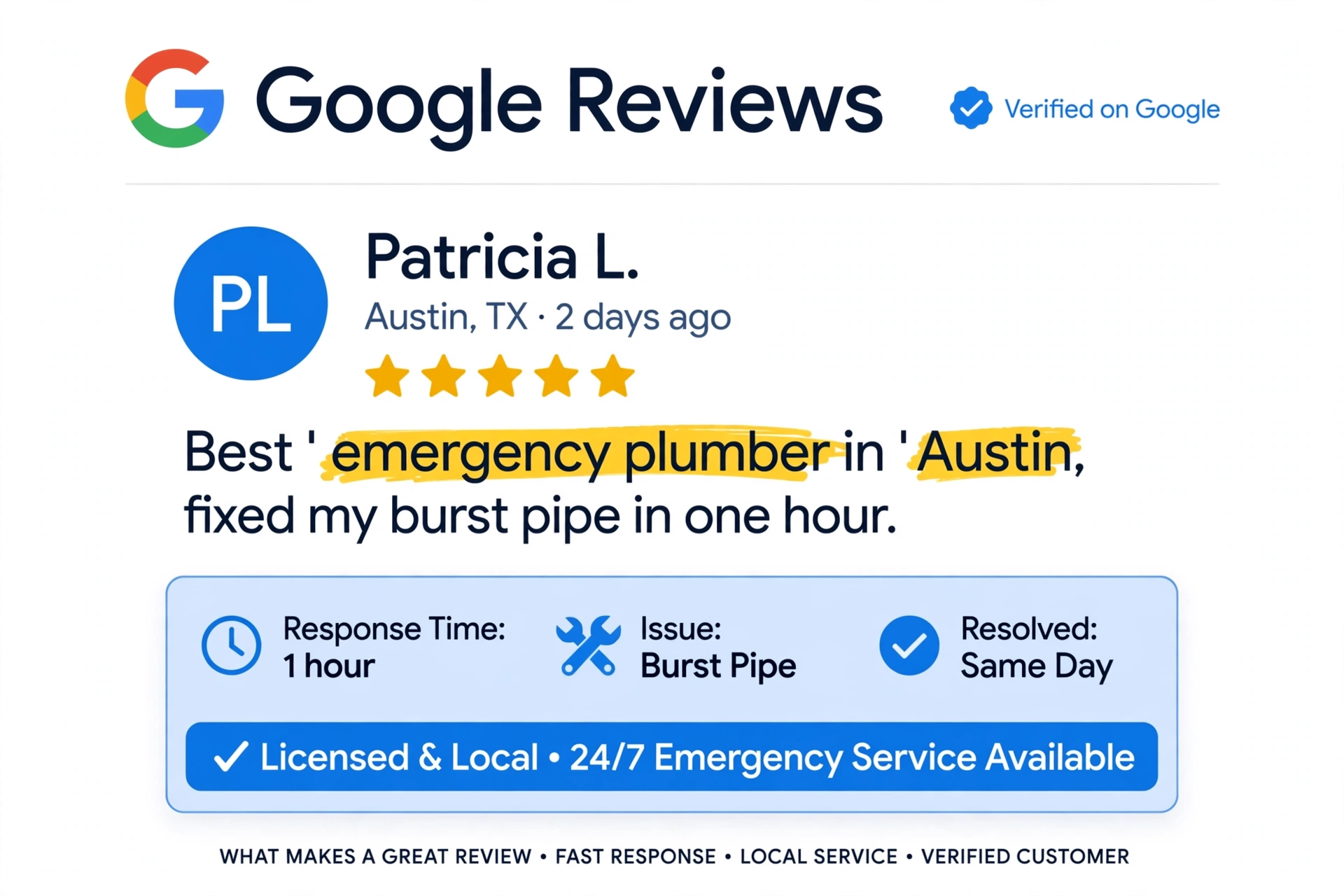
- Keyword richness: when customers naturally mention services and places (“best emergency plumber in Austin”), Google treats that text as confirmation of what you offer. This is free, high-authority SEO content written by your customers.
Do reviews directly cause rankings? They contribute. A business with fewer reviews can still outrank you on proximity or profile strength. Reviews are one of the heaviest signals you control, not the whole game.
What Should You Do With Reviews You Already Have?
Start by mining what is already there. Read your last fifty reviews and note the exact words customers use for your services. Those phrases are keyword gold: real language, real intent, zero research cost. Echo the best phrasing in your Google Business Profile description, posts, and website headings.
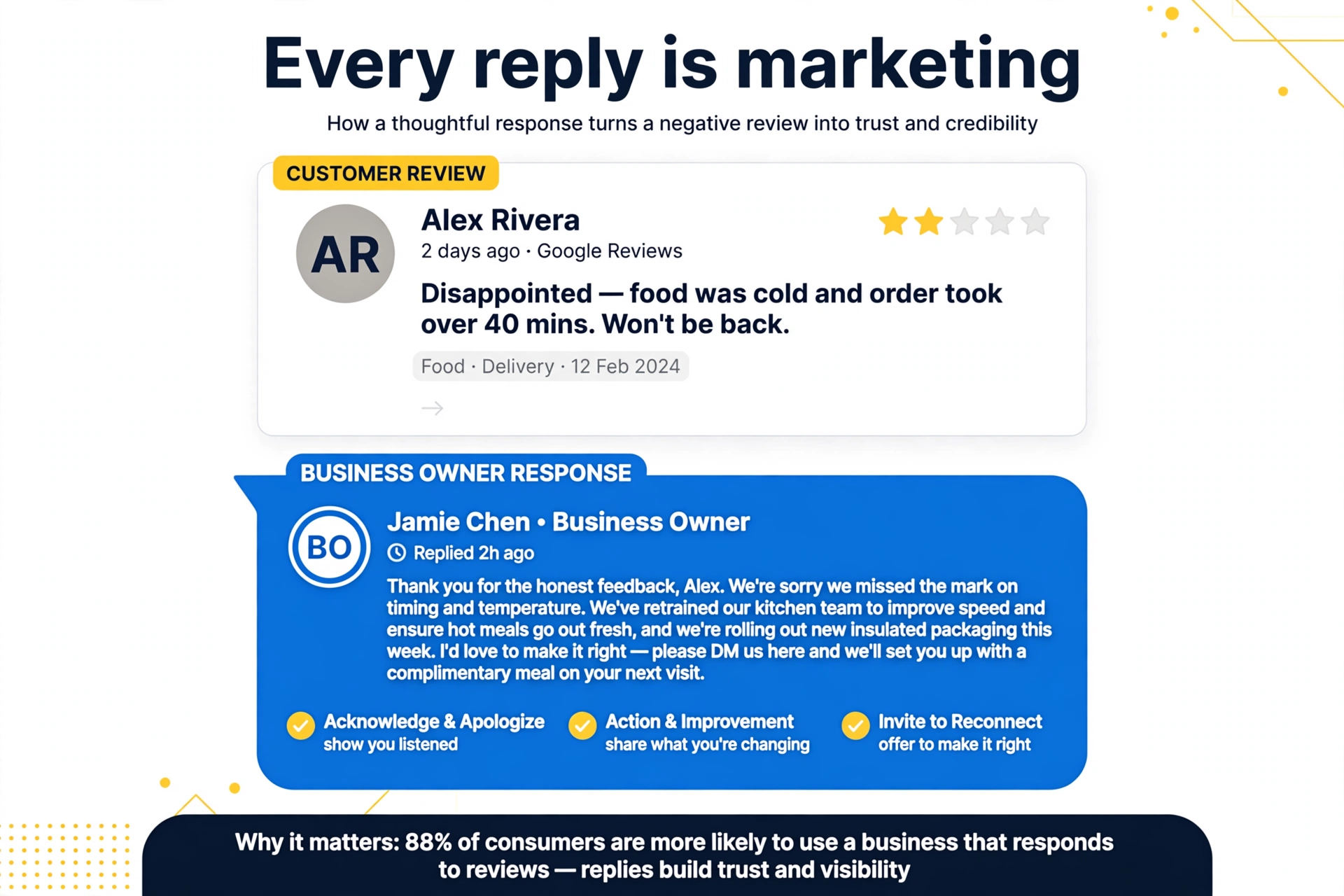
Then respond to every single review, including old ones, within 48 hours going forward. For positive reviews, thank the customer by name and mention the specific service. This is not just politeness: your response lets you naturally include keywords and shows future customers you care.
For negative reviews, respond calmly and publicly, then resolve privately. A professional reply to a bad review convinces more future customers than ten perfect ratings. Never argue, never get defensive, and never fake a resolution that did not happen.
How Do You Build a System That Gets More Reviews?
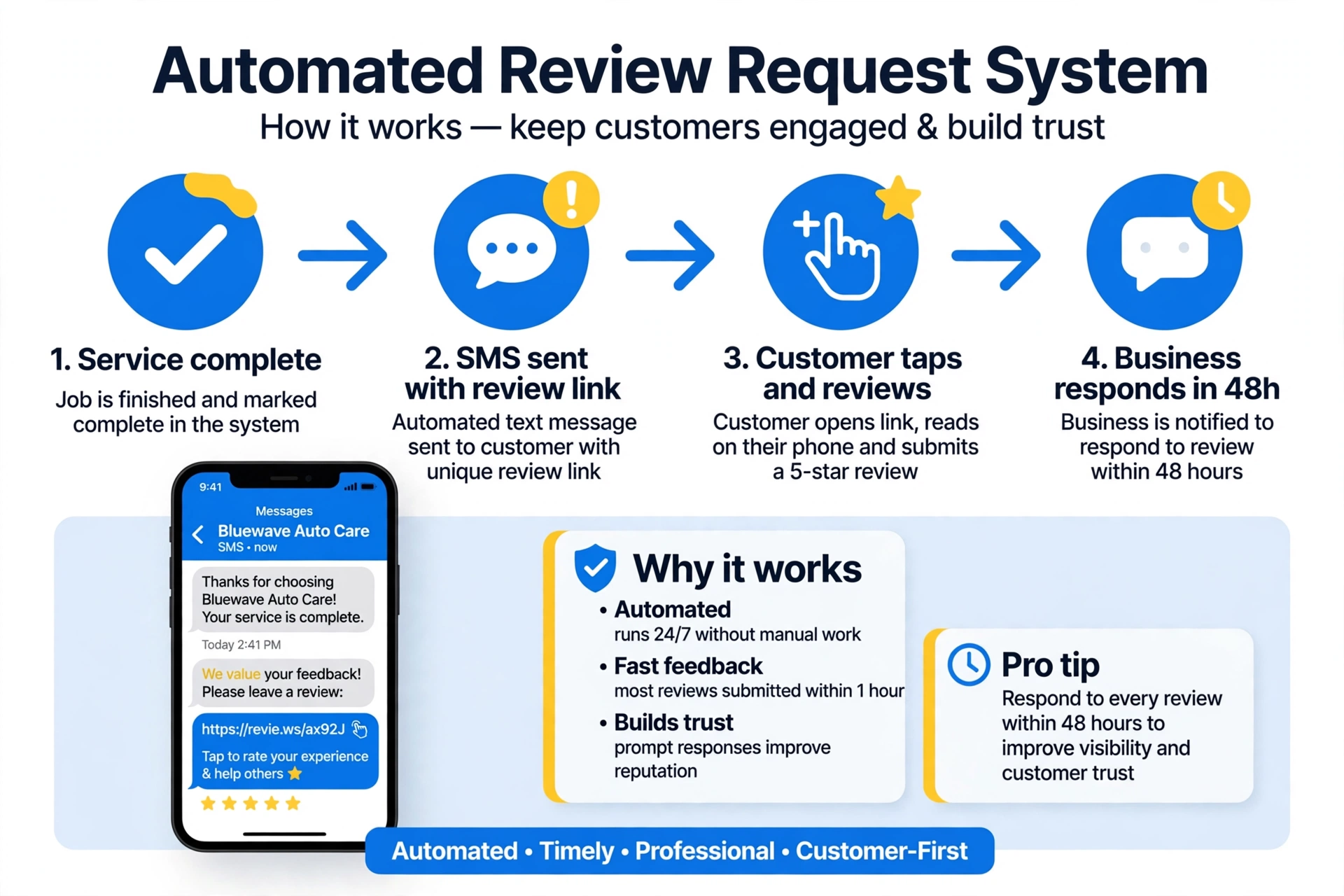
Review generation fails when it depends on memory. Build it into the workflow: when a job finishes or a happy customer pays, the very next step is a review request with a direct link. Use your Google Business Profile short link or a QR code at checkout. One tap, no friction.
Timing matters. Ask when satisfaction peaks: right after the repair, the meal, the appointment. A text message with the link sent within the hour converts far better than an email three days later. Train staff to ask as part of the job, not as an afterthought.
Can I offer discounts for reviews? No. Paying for reviews violates Google’s policies and risks your profile. Incentivizing feedback of any kind is a short-term gamble with long-term consequences.
One more warning: never use “review gating,” the practice of screening customers and only sending happy ones to Google. Google has penalized businesses for it. Ask everyone, handle criticism professionally, and let the average reflect reality.
How Do You Turn Feedback Into Website Content?
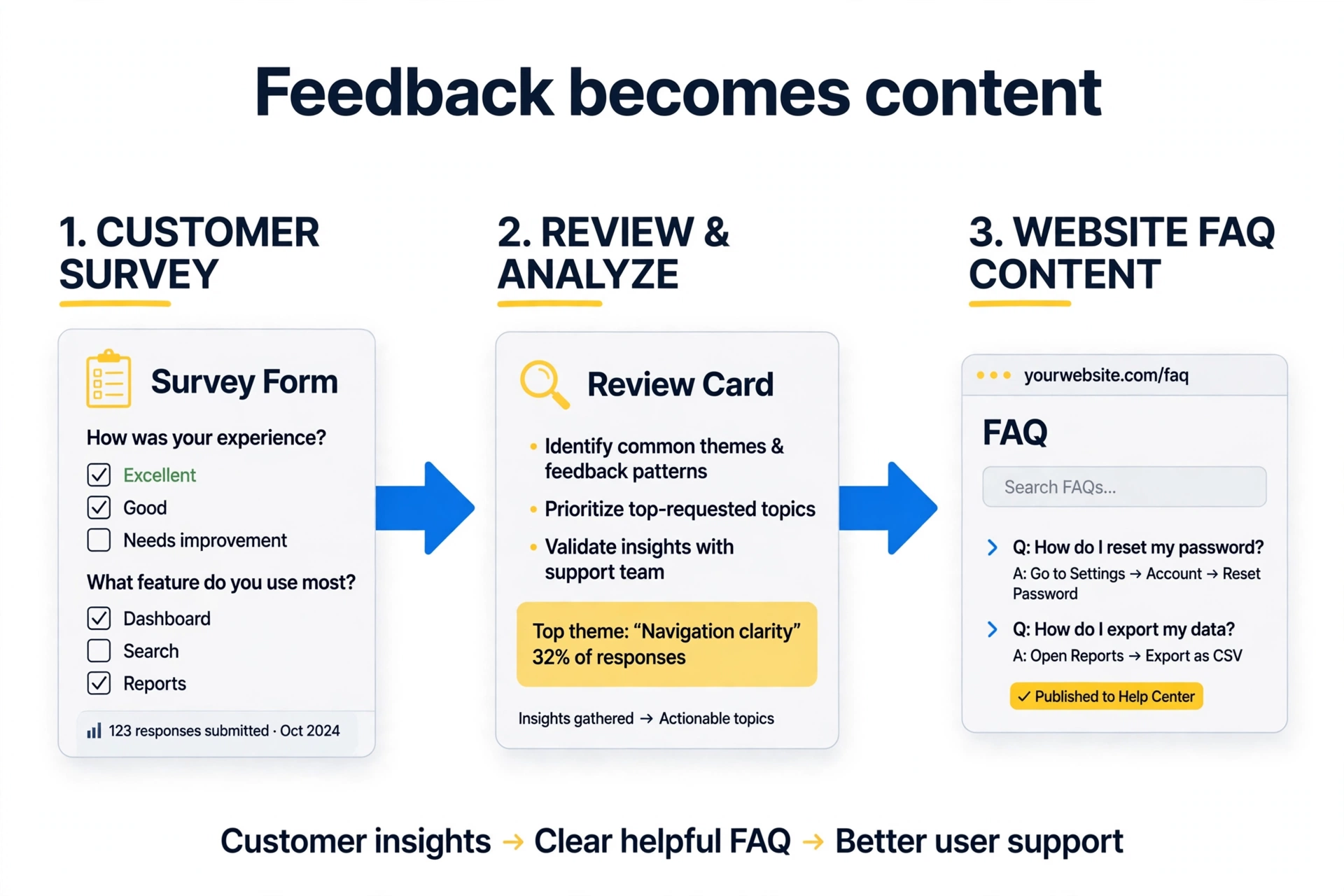
This is where feedback becomes an SEO asset beyond rankings. Collect the questions customers ask repeatedly, in reviews, in emails, at the counter, and turn them into content:
- FAQ pages: every repeated question becomes an FAQ entry with a direct answer. These rank in People Also Ask boxes and voice searches.
- Service page improvements: when reviews keep praising one specific thing (“arrived in 20 minutes”), feature it on the relevant service page.
- Google Business Profile posts: turn a glowing review into a profile post highlighting that service.
- GBP Q and A: seed your profile’s Questions section with real questions customers ask, then answer them yourself.
- Testimonial pages: long-form testimonials with customer permission add fresh, keyword-rich content to your site.
The pattern is simple: customers tell you what they care about in their own words. Your job is to publish answers in those same words. This is how small businesses outrank competitors with bigger budgets: authenticity Google cannot fake.
What About Negative Feedback?
Negative reviews feel like damage. They are actually your most valuable feedback channel. A pattern of complaints about the same thing, slow response times, confusing pricing, parking trouble, is free business intelligence pointing at exactly what to fix.
Fix the underlying issue when you can, then update your listing or website so future customers see the improvement. “We now offer text updates on arrival time” turns a past complaint into a current selling point.
Should I flag fake reviews? Yes, if they are genuinely fake. Use Google’s reporting process for reviews that violate policy. But do not waste energy disputing honest criticism. Responding well to a real complaint does more for your business than removing it ever would.
How Do You Measure Whether It Is Working?
Do not count reviews in isolation. Track what they produce:
- Profile actions: calls, direction requests, and website clicks in your Google Business Profile insights, month over month.
- Rating trend: is your average climbing toward 4.5+? That is the threshold where click-through jumps.
- Review velocity vs. competitors: are you gaining reviews faster than the businesses above you in the Map Pack?
- Keyword visibility: check whether phrases from your reviews start appearing in your profile’s search insights.
- Conversion rate: are more profile views turning into calls? That is reviews doing their real job.
Give the system ninety days of consistent effort before judging. Review-driven movement is gradual, then compounding. Our local SEO services include review strategy and reputation management for businesses that want it systematized.
Know the rules before you ask: Google’s review content policies, plus Search Engine Journal’s local SEO guide for the bigger picture.
What Should You Do This Week?
Customer feedback improves local SEO in three ways: it feeds Google’s prominence signals, it writes keyword-rich content you could never fake, and it tells you exactly what customers want. Build the review system, respond to everything, publish answers to real questions. Local SEO Rankers helps local businesses turn reputation into rankings every day.
Want a review system that runs itself? Contact Local SEO Rankers for a free audit. We will assess your review profile, your competitors, and build you a feedback strategy that drives rankings.
Still Have Questions About Reviews and Local SEO?
Do Google reviews directly improve SEO rankings?
They contribute strongly to prominence, one of Google’s three local ranking factors. Google has confirmed that high-quality positive reviews improve visibility. They are a major signal, but not the only one.
How many reviews do I need for local SEO?
More than your closest competitors, gained steadily. Five genuine reviews beat zero, fifty make you authoritative in most markets. Steady velocity matters as much as the total count.
Should I respond to every review?
Yes. Google’s own documentation says helpful responses show you are responsive. Reply to positives with thanks and specifics, and to negatives with calm professionalism. Future customers read your replies closely.
Can I ask customers to mention specific keywords in reviews?
You can encourage detailed reviews (“tell us which service you used”), but never script or dictate review text. Authentic, specific reviews are valuable; coached or fake ones risk penalties.
What is review gating and why is it bad?
Review gating means screening customers and only directing happy ones to Google. It violates Google’s policies and can get reviews removed or your profile penalized. Ask everyone and handle criticism professionally.
How do negative reviews affect local SEO?
A few honest negatives among many positives barely hurt and can even help credibility. What matters is your response and whether you fix the underlying issues. Patterns of unaddressed complaints signal a declining business to Google and customers alike.