Someone in your city just searched “best pizza near me.” Google showed three restaurants. Yours was not one of them. That customer walked into a competitor’s door, and you never even knew they existed.
This happens thousands of times a day in every industry. The winners are not always the best businesses. They are simply the most visible where it counts: local search. So why does local SEO matter, and how does it turn into real customers? Let us break it down with real numbers and zero fluff.
The short answer: Local SEO matters because nearly half of all Google searches have local intent, and most of those searchers act fast. It puts your business in front of nearby customers the moment they are ready to buy, through Google Maps, listings, and reviews, turning searches into calls, visits, and sales without paying for every click.
What Is Local SEO, Exactly?
Local SEO is the practice of optimizing your online presence so your business shows up when people nearby search for what you offer: “emergency plumber near me,” “dentist in Austin,” “coffee shop open now.” It covers your Google Business Profile, your reviews, your listings across directories, and local signals on your website.
How is it different from regular SEO? Regular SEO chases broad keywords for anyone, anywhere. Local SEO targets the right people, right here, right now. Google weighs different signals for local results: proximity to the searcher, profile completeness, and what real customers say about you. A small shop with a well-managed profile and fifty genuine reviews can outrank a national brand in the local Map Pack.
Why Does Local SEO Matter So Much for Small Businesses?
Your customers are already searching nearby
Around 46% of all Google searches seek local information (industry data). Nearly half of all searches are people looking for something near them. And Google confirms that 76% of nearby smartphone searches lead to a visit within 24 hours. Three out of four become a physical visit within a day. These are not casual browsers. They are buyers with wallets half open.
The Map Pack wins the clicks
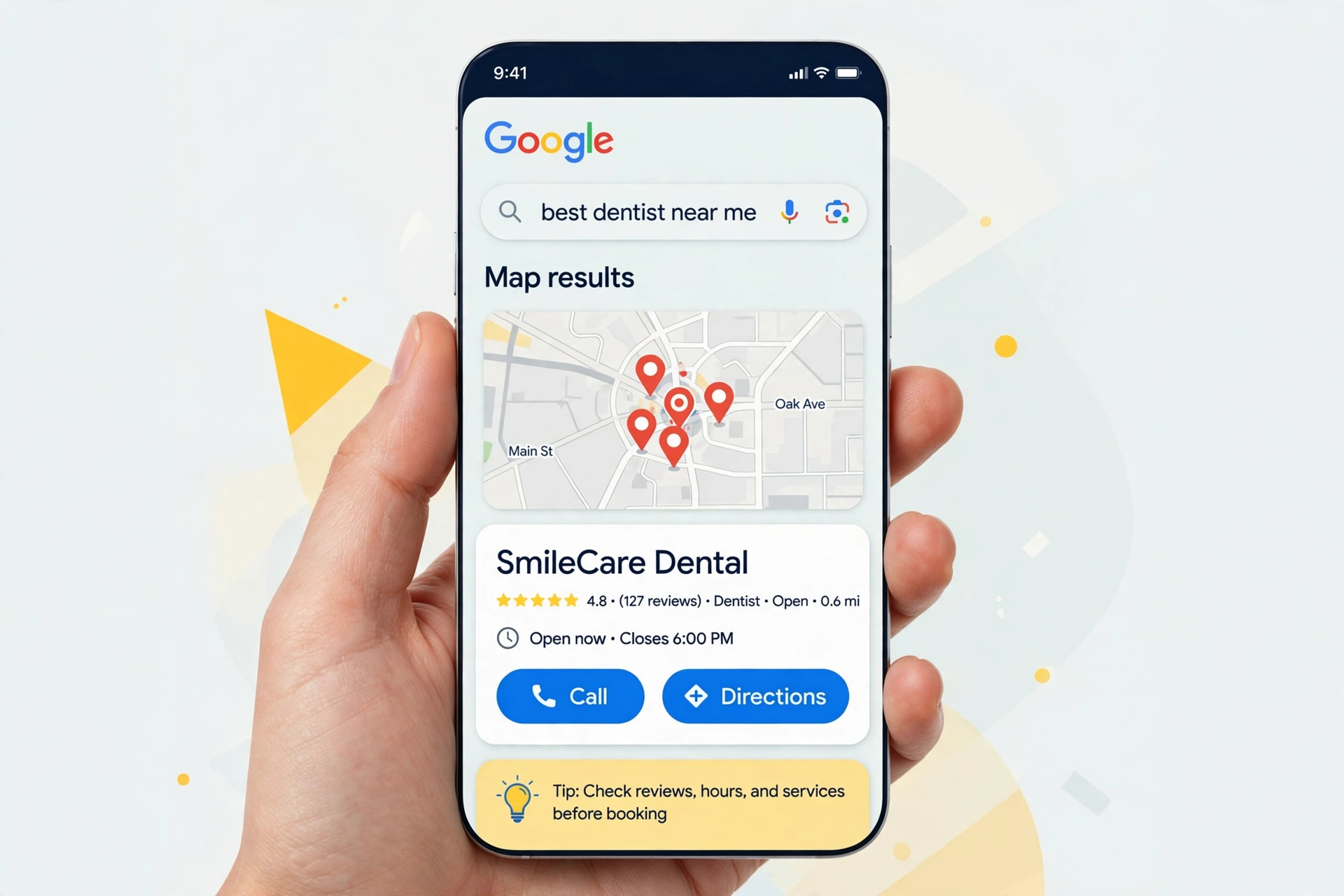
For local searches, Google shows the Map Pack first: three businesses with a map, ratings, and hours, above the regular results. It absorbs the majority of clicks and calls. Miss those three spots and you are invisible to most local searchers, however nice your website is.
Do people not scroll past to organic results? Some do, but the top three map listings take the lion’s share of local clicks. Position four might as well be page two. That is why local SEO matters: it decides whether you get seen or skipped.
How Does Local SEO Actually Bring You Customers?
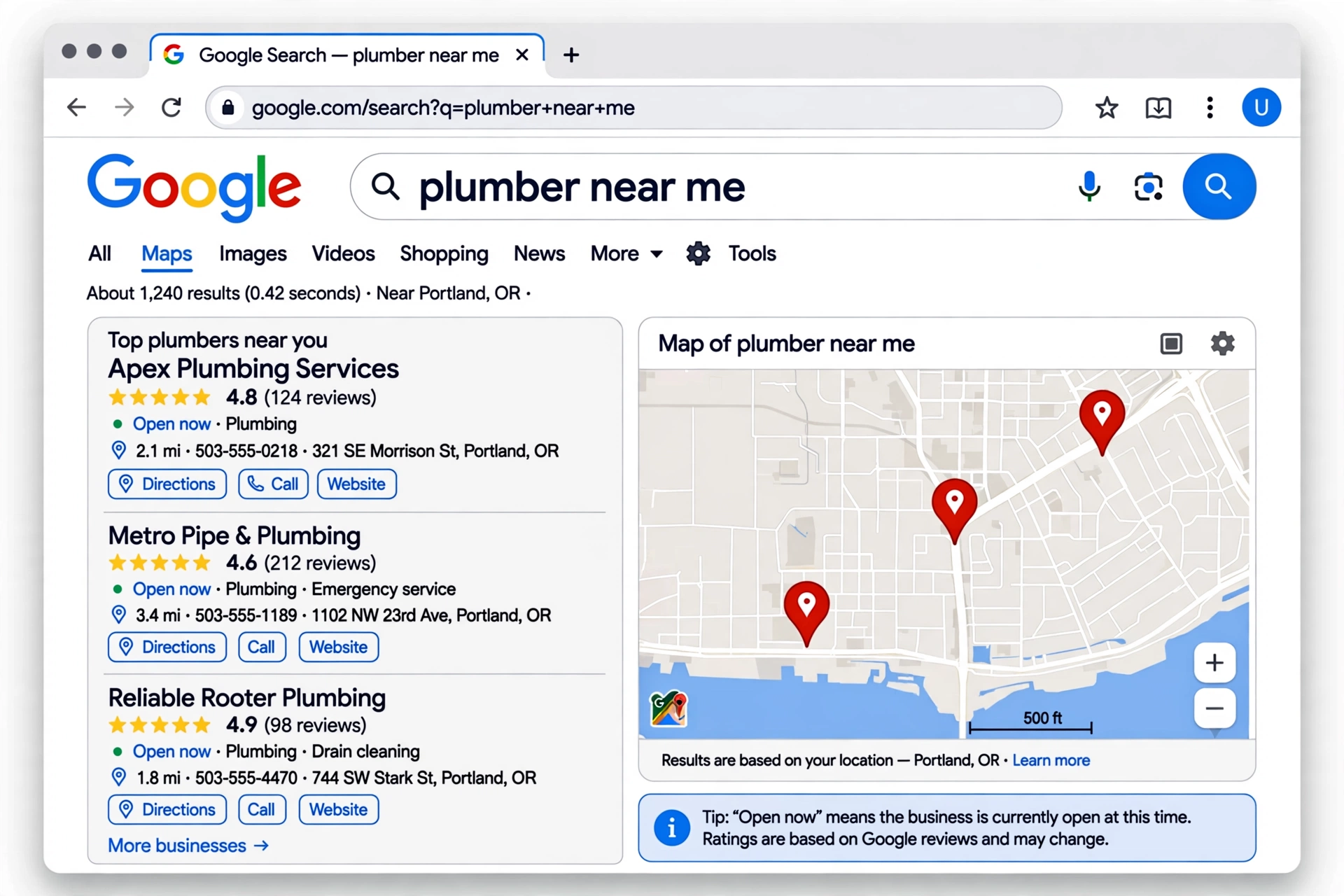
Trace the journey. A customer searches “AC repair near me.” Google weighs relevance, distance, and prominence. Whitespark’s 2026 study found Google Business Profile signals drive about 32% of Map Pack rankings, while proximity explains roughly 55% of ranking variance (Search Atlas).
The customer sees your profile: real work photos, 4.8 stars from 120 reviews, “Open now,” a tap-to-call button. They call. Forty seconds, zero cost per click. That is the machinery: a complete profile, consistent business info across the web, steady reviews, and locally relevant content. Each piece builds Google’s confidence that you are real and trustworthy. Our local SEO services are built around exactly this system.
No physical storefront? You can still rank. Service-area businesses like plumbers and cleaners win local results by defining service areas instead of showing an address. Google fully supports this.
Why Do Reviews Matter More Than Ads?
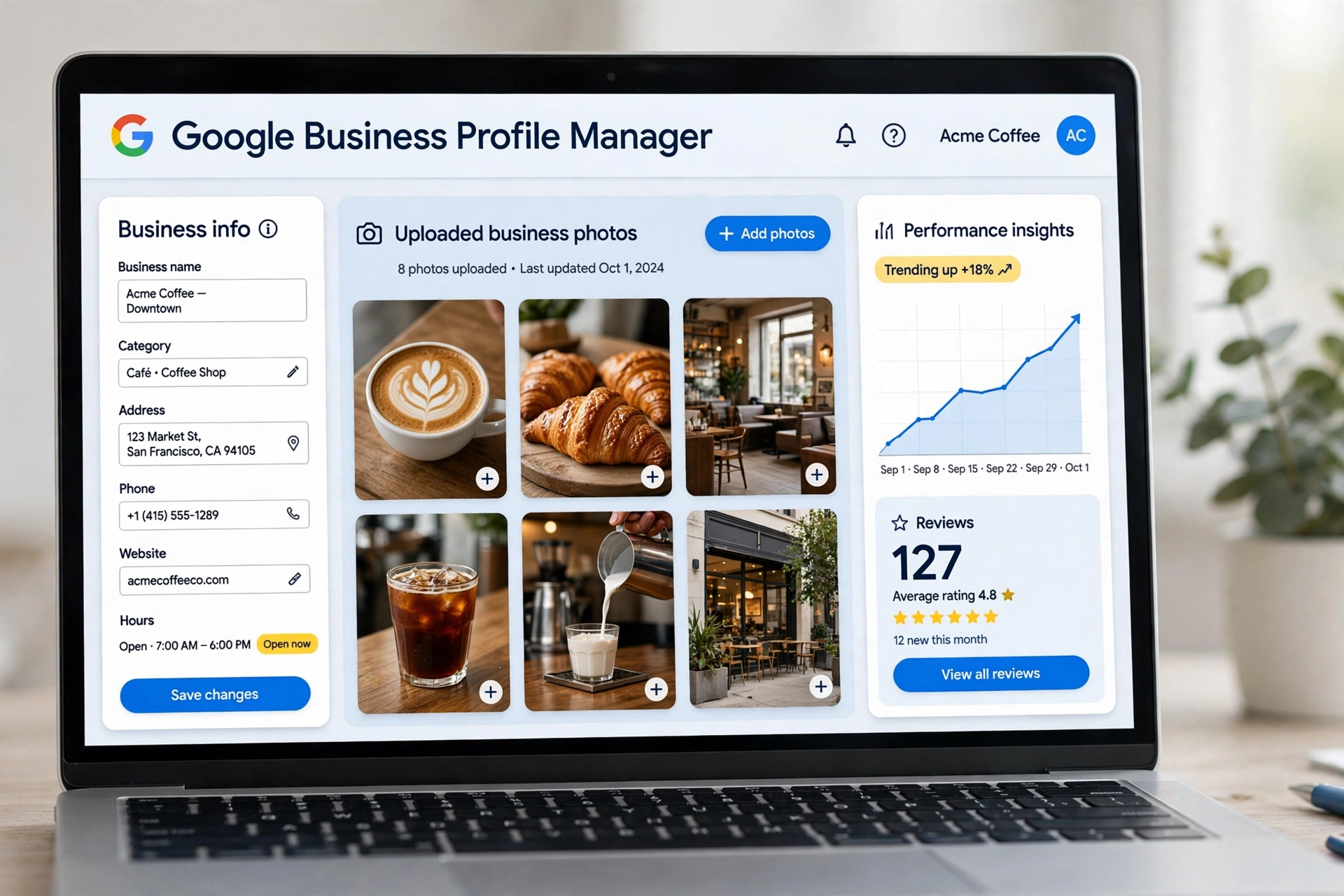
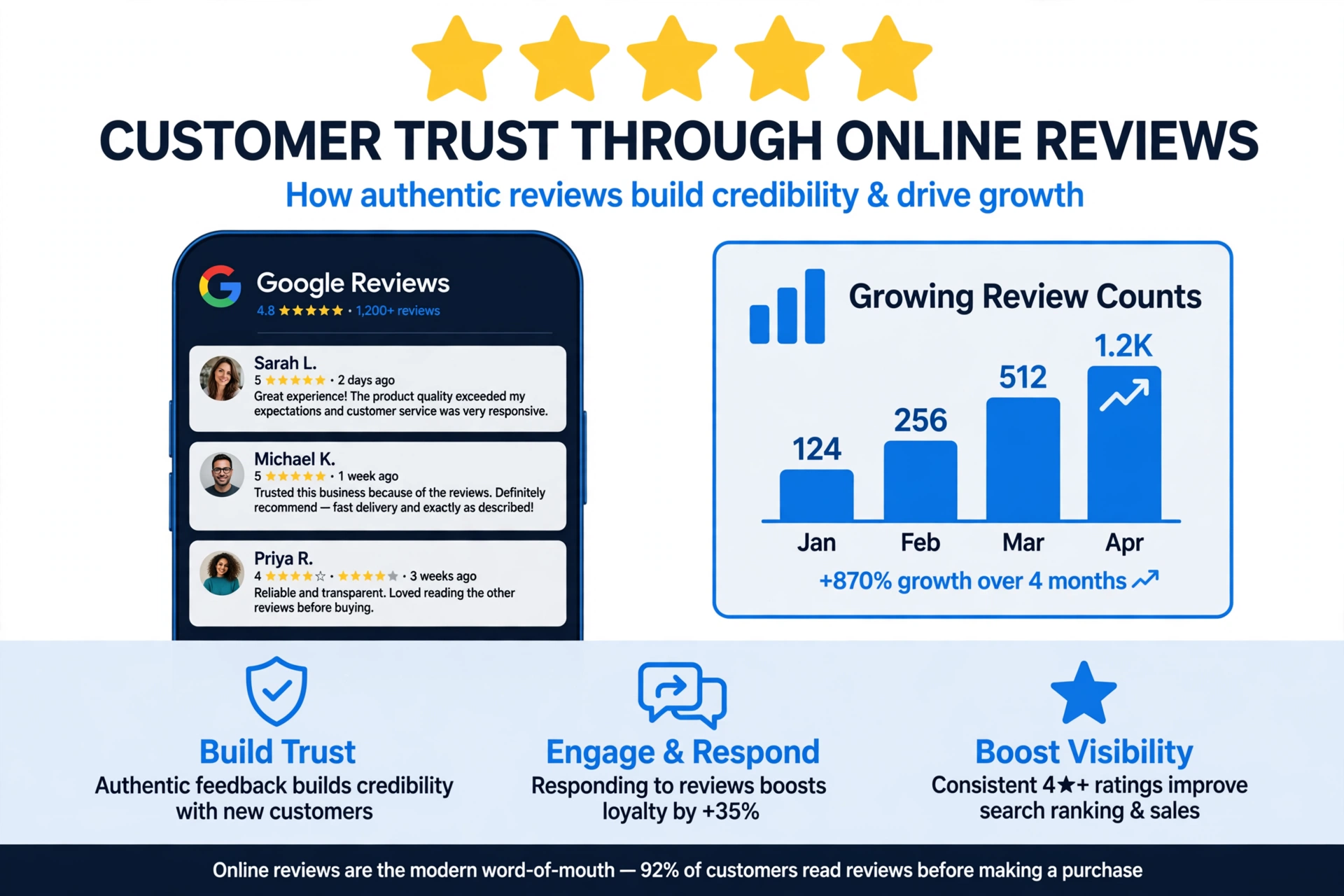
Paid ads cannot buy this: trust before the first conversation. Comparing three Map Pack listings, customers pick the one with more reviews, recent photos, and thoughtful replies, even at a higher price. Review signals now drive about 20% of local pack rankings, up from 16% (Whitespark 2026). Reviews convince humans and move rankings.
What actually works, from real client work: ask every happy customer with a direct link, reply to every review within 48 hours, and never buy fake reviews. Google’s spam detection is ruthless, and one penalty can bury a profile for months.
Reply to every review, even positive ones? Yes. A specific reply (“Glad the emergency repair worked out, Sarah!”) shows future customers you care and shows Google your profile is actively managed.
Is Local SEO Better Than Paid Ads?
| Local SEO | Paid Ads | |
|---|---|---|
| Cost | Investment upfront, then compounding free traffic | Pay for every click, forever |
| When you stop paying | Calls keep coming | Traffic stops instantly |
| Trust | High: reviews and organic presence | Lower: users know it is an ad |
| Timeline | 3 to 6 months to mature | Live today |
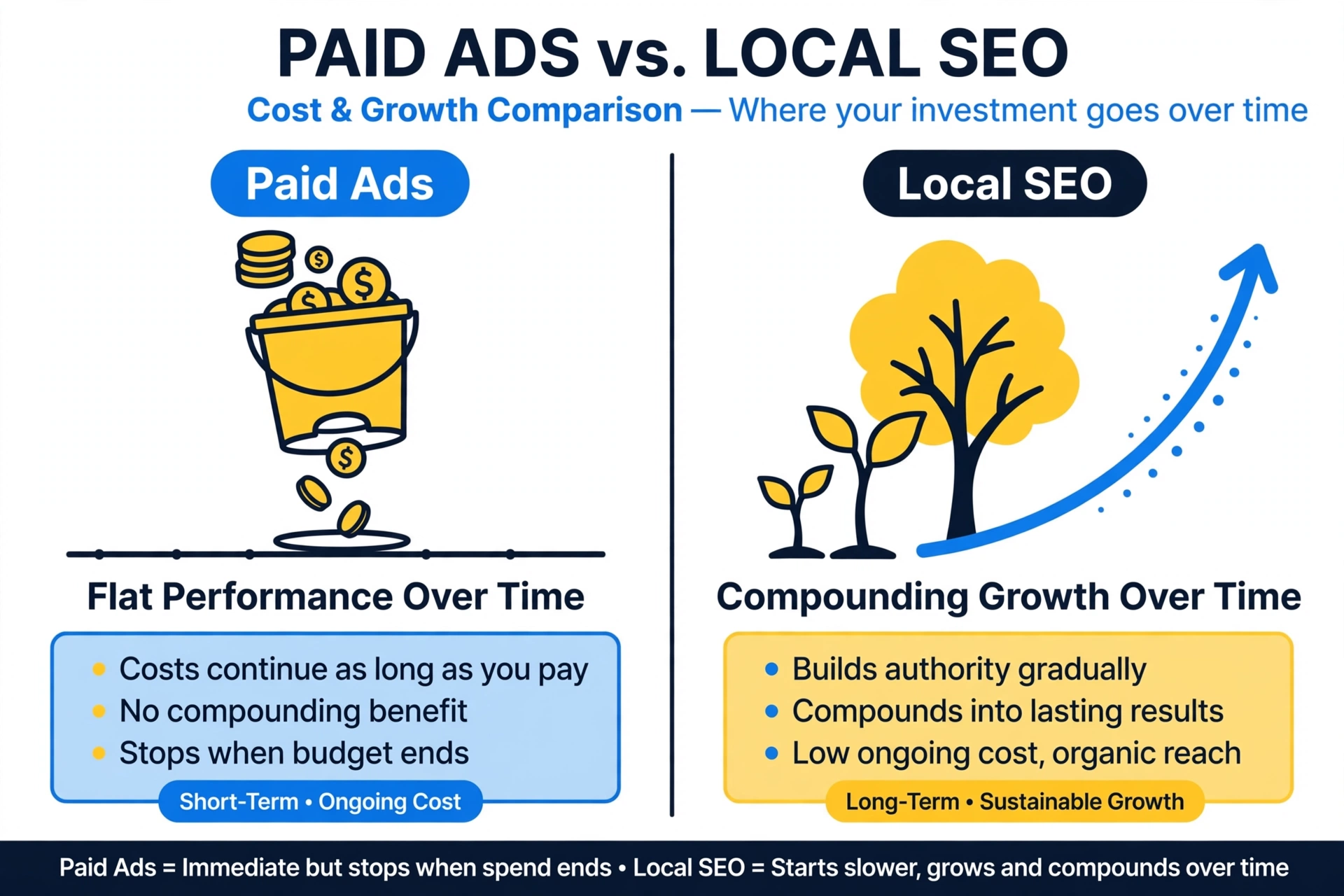
How I explain it to clients: paid ads rent attention, local SEO owns it. And there is urgency. Paid placements in the local pack jumped from about 1% to 22% between January 2025 and January 2026 (Sterling Sky). Google keeps selling that top space, so strong organic local presence is your defense against rising ad costs.
Does Local SEO Still Matter With AI Search in 2026?
It matters more. AI assistants do not invent recommendations; they pull from the same structured local data: your profile, reviews, citations, website. A BrightLocal 2026 survey found 45% of consumers used AI tools for local recommendations, up from 6%. When someone asks an AI for “a reliable electrician nearby,” it reads the same signals Google reads. Weak local SEO means invisible to AI search too. Local SEO Rankers tracks how AI search keeps reshaping local visibility.
Do I need separate “AI SEO”? Not really. The work is the same: accurate business data, genuine reviews, clear service descriptions. Nail the fundamentals and you serve both Google and AI answers.
Why Isn’t My Business Showing Up on Google Maps?
The most common frustration I hear. Run this checklist:
- Profile not claimed or verified. Claim it first; Google’s guide covers how: edit your Business Profile.
- Wrong primary category. It is your strongest relevance signal. “Pizza restaurant” beats “Restaurant” for pizza searches.
- Inconsistent NAP. Name, address, and phone must match exactly across your site, socials, and directories.
- Keyword-stuffed business name. “Best Cheap Plumber NYC” violates Google’s guidelines and risks suspension. Use your real name.
- Dormant profile. No reviews, old photos, no posts signals a dormant business. Google rewards active profiles.
- Proximity filter. A closer competitor may simply outrank you for that searcher. More reviews and stronger prominence close the gap.
How Long Does Local SEO Take to Work?
Expect 3 to 6 months for meaningful movement, with quick wins in the first weeks. Profile fixes and corrected business info can shift things fast; review velocity and authority take longer. Anyone promising Map Pack domination in two weeks is selling you something.
Why so long? Google needs consistency over time. Fifty reviews in one week looks suspicious; five a month for ten months looks like a thriving business. Local SEO rewards the steady, not the speedy.
Where Should You Start With Local SEO?
- Claim and verify your Google Business Profile. Step zero. Nothing works properly without it.
- Complete every field. Description, services, hours, photos, attributes. Empty fields are missed signals.
- Fix your NAP everywhere. Identical name, address, and phone on your site, socials, and directories.
- Build a review engine. Every finished job gets a polite request with a direct link. Steady beats spiky.
- Post and add photos monthly. Fresh content tells Google and customers the business is alive.
This foundation alone beats most local competitors, whose profiles sit untouched since 2019 while customers pick the business that looks alive.
Conclusion
Why does local SEO matter? Your customers search locally, decide fast, and trust what Google shows them. It captures buyers at the moment of intent, builds trust before the first call, compounds instead of draining budget, and now feeds AI answers too. It is the highest-ROI channel most small businesses still ignore. The Map Pack leaders are not lucky. They are optimized.
Want more local customers without the guesswork? Contact Local SEO Rankers for a free local SEO audit. We will show exactly where you stand and what it takes to reach the Map Pack.
Frequently Asked Questions
What is local SEO in simple terms?
Making your business show up when nearby customers search for what you offer, mainly on Google Maps and local results. It means optimizing your Google Business Profile, earning reviews, keeping business info consistent online, and adding locally relevant website content.
How much does local SEO cost?
DIY costs mostly time. Professional services typically run a few hundred to a few thousand dollars monthly depending on market competition. Most businesses find it far more cost-effective than sustained ad spend within a year.
Can I do local SEO myself?
Yes. Claim your profile, complete every field, fix your info across the web, and build a review routine. Most DIY efforts stall on consistency and keeping up with Google’s changes, which is where professional help pays for itself.
How long before I see results?
Profile fixes can move things in weeks; meaningful Map Pack rankings usually take 3 to 6 months of steady work. Review building compounds over time, so consistency beats bursts.
Local SEO vs regular SEO: what is the difference?
Regular SEO targets broad keywords for a general audience. Local SEO targets location searches and Google’s local factors: proximity, relevance, and prominence, including your profile, reviews, and citations.
Do I need a physical address for local SEO?
No. Service-area businesses can rank without showing an address by setting service areas instead. But fake addresses, P.O. boxes, and virtual offices violate Google’s guidelines.