
Your page ranks number 14 on Google. Close enough to taste page one, far enough that almost nobody ever clicks. Welcome to the cruelest spot in SEO: page two.
Here is the good news nobody tells you: moving from page two to page one is the highest-ROI work in all of SEO. The jump takes far less effort than ranking from scratch. This guide is the exact playbook.
The short answer: To reach Google’s first page: find keywords where you rank 11 to 20 in Search Console, improve the existing page instead of creating a new one, rewrite titles for clicks, upgrade content past the page-one competition, add internal links, close the backlink gap, and fix any cannibalization. Positions 11 to 13 can move in 4 to 8 weeks.
Why Is Page 2 the Worst Place to Be?
Page one captures the overwhelming majority of clicks. The drop from position 10 to position 11 is the steepest cliff in search: same quality page, a fraction of the traffic. Ranking on page two means Google already trusts your page enough to rank it, but not enough to show it where anyone looks.
That is precisely why it is your biggest opportunity. A page at position 14 has crawl history, existing authority, and proven relevance. Moving it six spots costs far less than taking a new page from zero to 14. Work your page-two list before writing a single new article.
How Do You Find Your Page 2 Keywords?
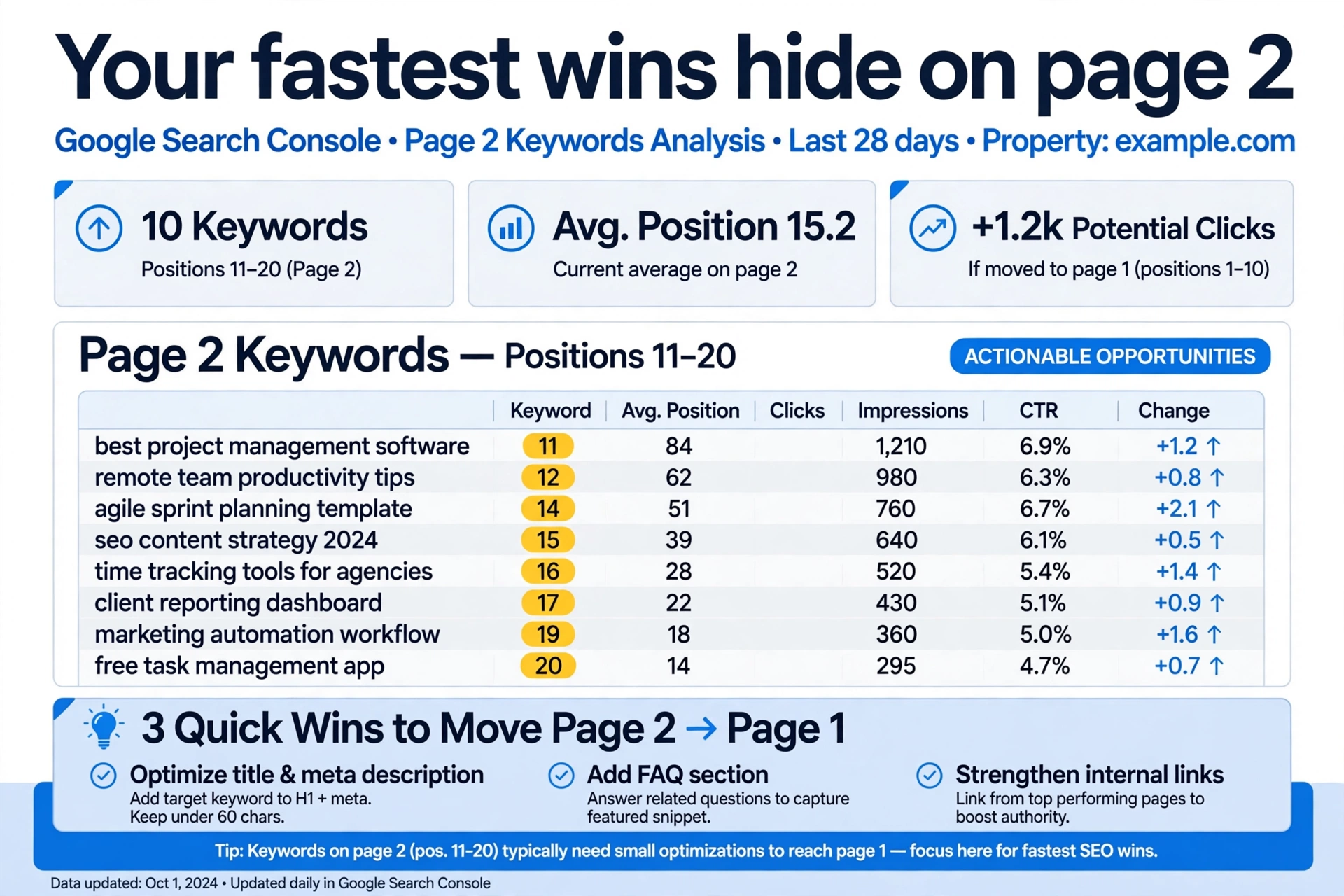
Open Google Search Console, go to the Performance report, and filter queries by average position between 11 and 20. Sort by impressions, highest first. These are searches where many people see you buried and almost nobody clicks.
Prioritize the list: high impressions plus positions 11 to 13 are your fastest wins. Commercial keywords (services, products, “near me” terms) outrank informational ones in value. Build a simple spreadsheet: keyword, current position, URL, impressions. This list is your first-page campaign.
Should You Improve the Page or Create a New One?
Improve the existing page, almost always. A page ranking at position 14 has history, backlinks, and authority already pointed at it. Creating a new page for the same keyword splits that authority and restarts the clock.
The only exception: if the existing page targets a different intent than the keyword needs. A blog post ranking for a transactional query will never convert or climb properly; there, a new purpose-built page (with a redirect or canonical strategy) is the right call. But that is rare. Default to upgrading.
What about cannibalization? Check whether two of your pages rank for the same keyword. If so, they are competing with each other and both lose. Merge the weaker into the stronger with a redirect, and watch the survivor climb.
How Do You Rewrite Titles for More Clicks?
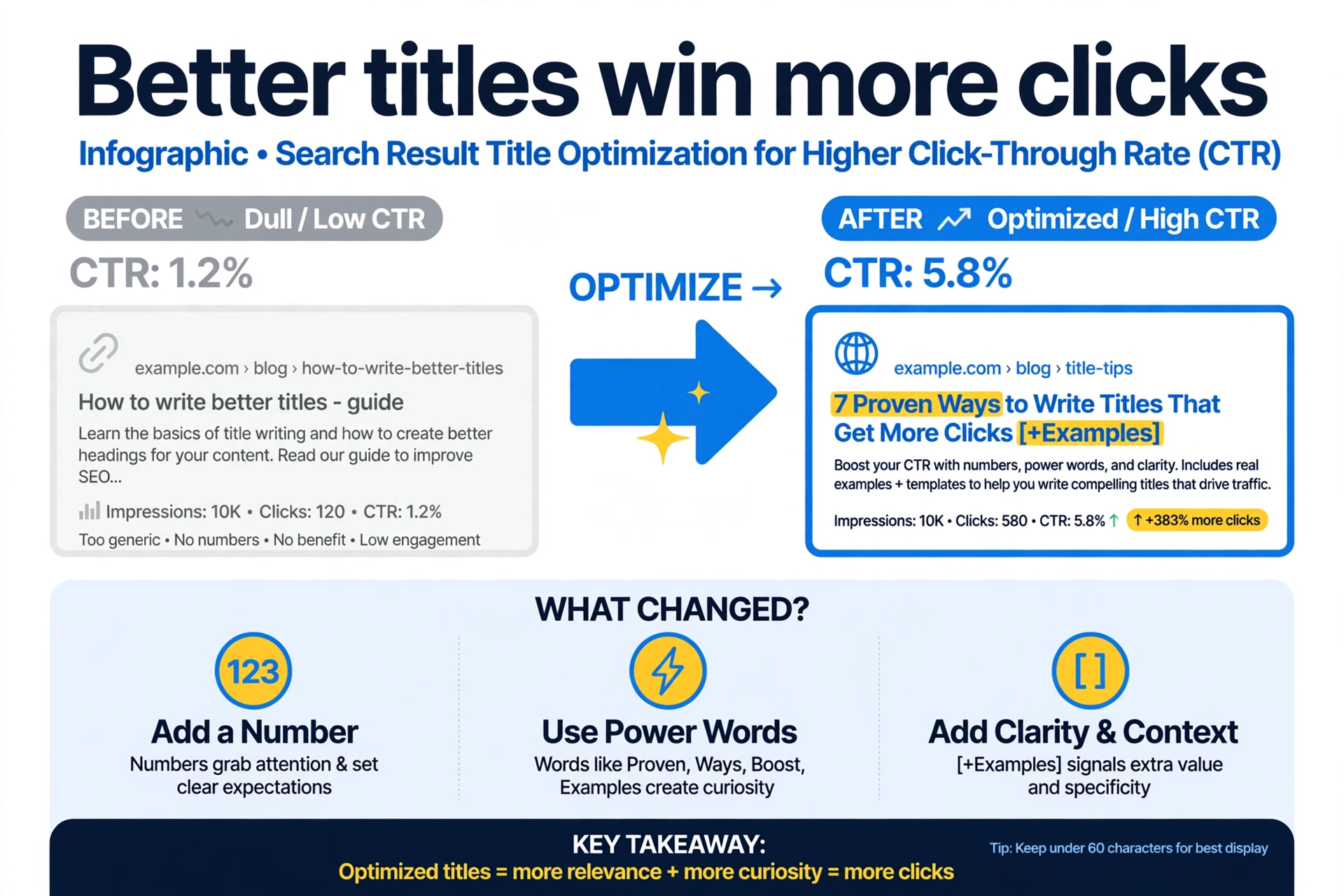
Your title tag is the cheapest lever you have. For each page-two keyword, rewrite the title to include the exact keyword near the front, add a compelling reason to click (a number, a year, a benefit), and keep it under 60 characters so it does not truncate.
Then rewrite the meta description as ad copy: what the searcher gets, why your page answers it best. Higher click-through rate sends engagement signals that feed back into rankings. For positions 11 to 13, a title rewrite alone can produce movement within weeks.
How Do You Upgrade Content to Beat Page 1?
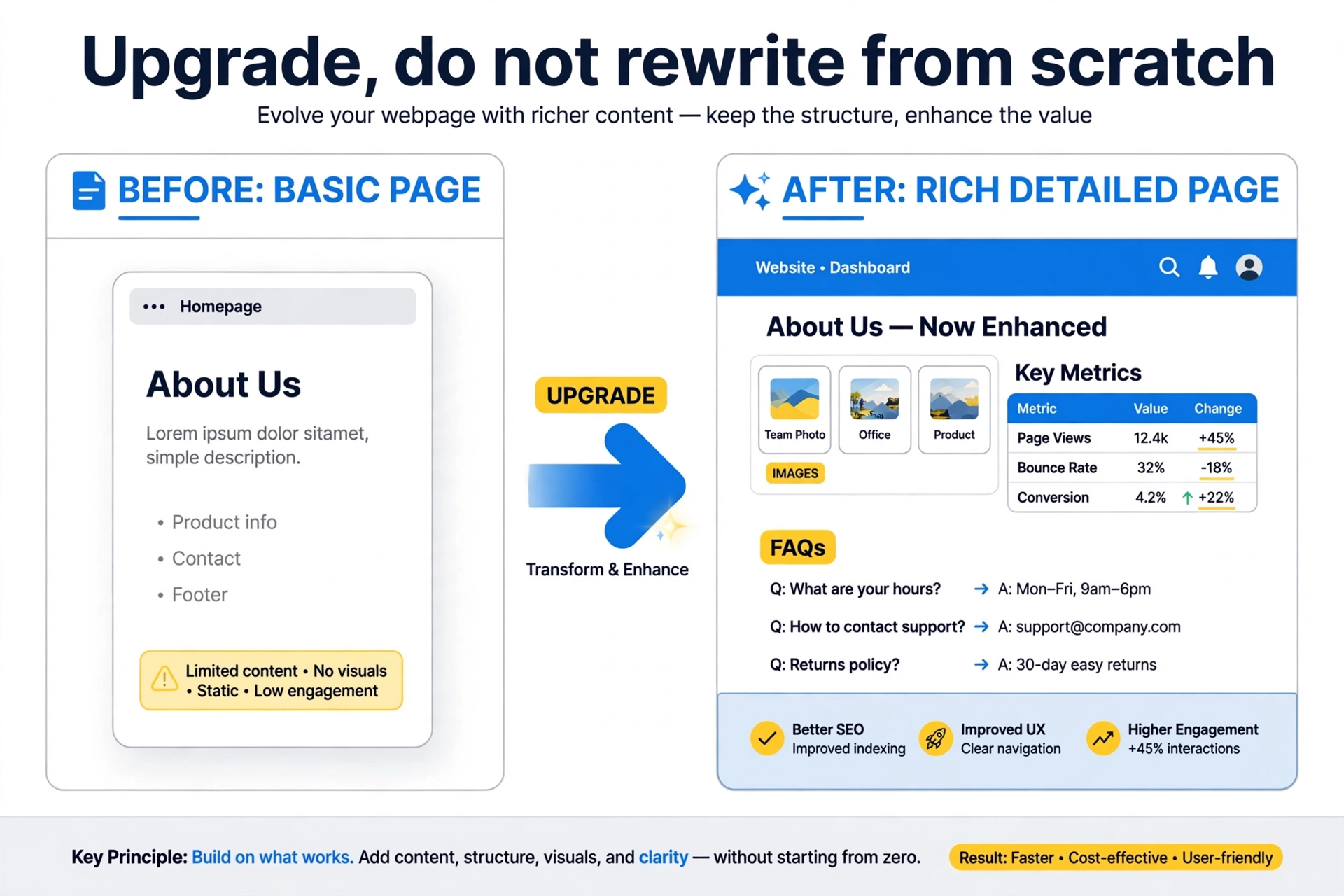
Open the top five page-one results for your keyword and audit honestly against them. Where are you thinner? Common gaps: missing subtopics they all cover, no original examples or data, outdated information, weak structure, no FAQ section.
Close the gaps without bloating. Add the missing subtopics with real depth, refresh outdated facts and screenshots, insert original examples only you can provide, and restructure with clear headings so both readers and AI systems extract answers easily. Then update the publish date honestly to reflect a meaningful refresh.
Do not just add words. A longer page that says nothing new will not beat a focused competitor. Depth means completeness of answers, not word count.
How Do Internal Links Push a Page Up?
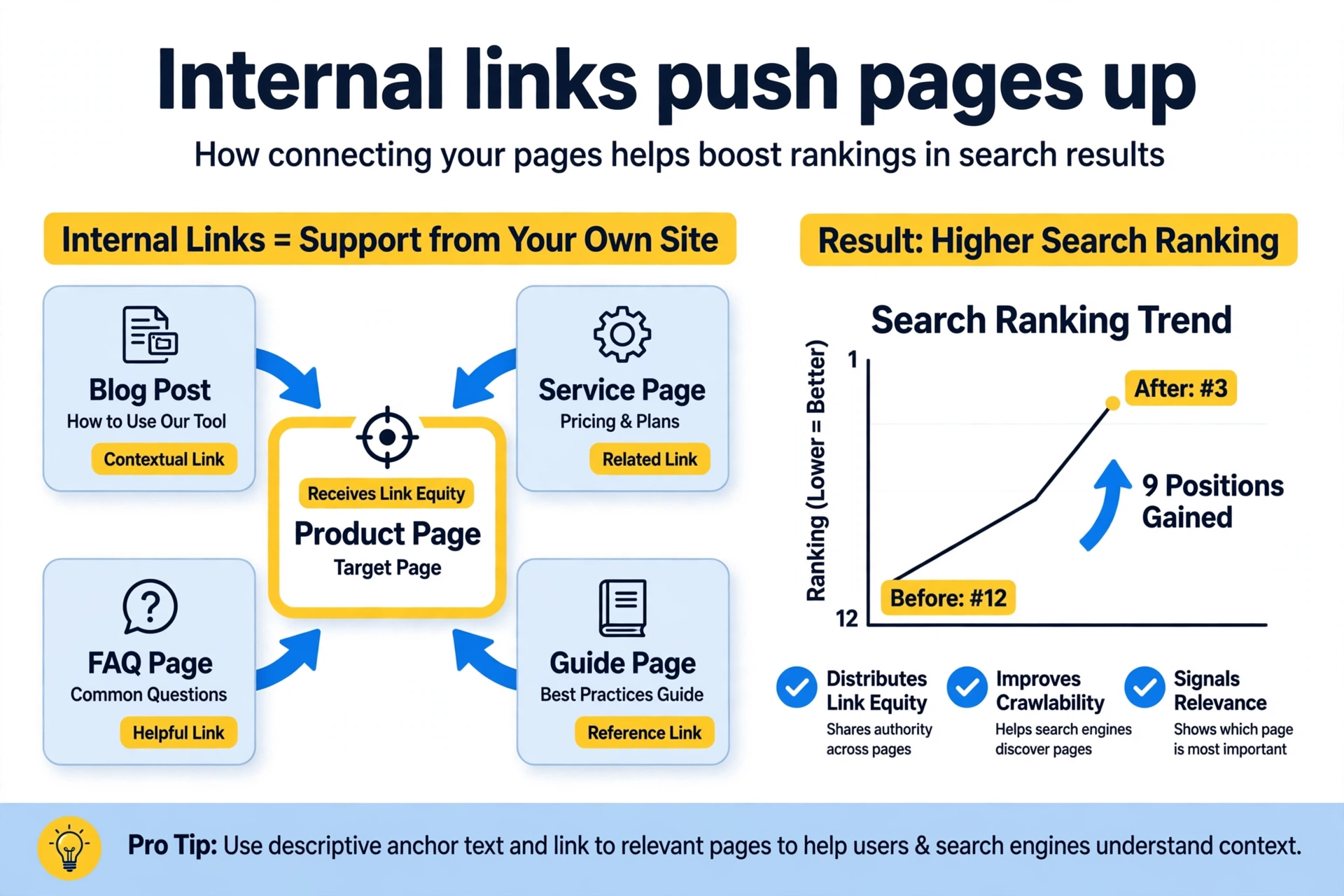
Internal links are the most underused ranking lever in existence. Find five to ten relevant pages on your own site and link to your target page with descriptive anchor text containing the keyword or a natural variation.
Prioritize links from your strongest pages: the homepage, popular blog posts, and high-authority service pages. Each internal link passes authority and tells Google the target page matters. For local businesses, link from location pages and the homepage to the service page you are pushing.
This costs nothing, takes an hour, and moves rankings measurably. Do it before spending a dollar on external link building.
When Do You Need Backlinks to Cross Over?
Sometimes content and titles are not enough. If competitors on page one have significantly more backlinks pointing at their specific URLs, you have an authority gap that only links close. Check the gap with any backlink tool: compare referring domains to your URL versus theirs.
You do not need hundreds. A handful of relevant, editorial links to the specific page often tips it over. Tactics that work: digital PR around original data, guest posts on industry sites, local sponsorships and partnerships, and reclaiming unlinked brand mentions. Keep anchors natural and varied.
How many links does it take? There is no fixed number. Close the gap relative to the specific pages above you, not some absolute target. Three strong relevant links can beat thirty weak ones.
How Long Does Page 2 to Page 1 Take?
Realistic timelines based on starting position:
- Positions 11 to 13: 4 to 8 weeks with title rewrites and content improvements. Add targeted links and it can happen faster.
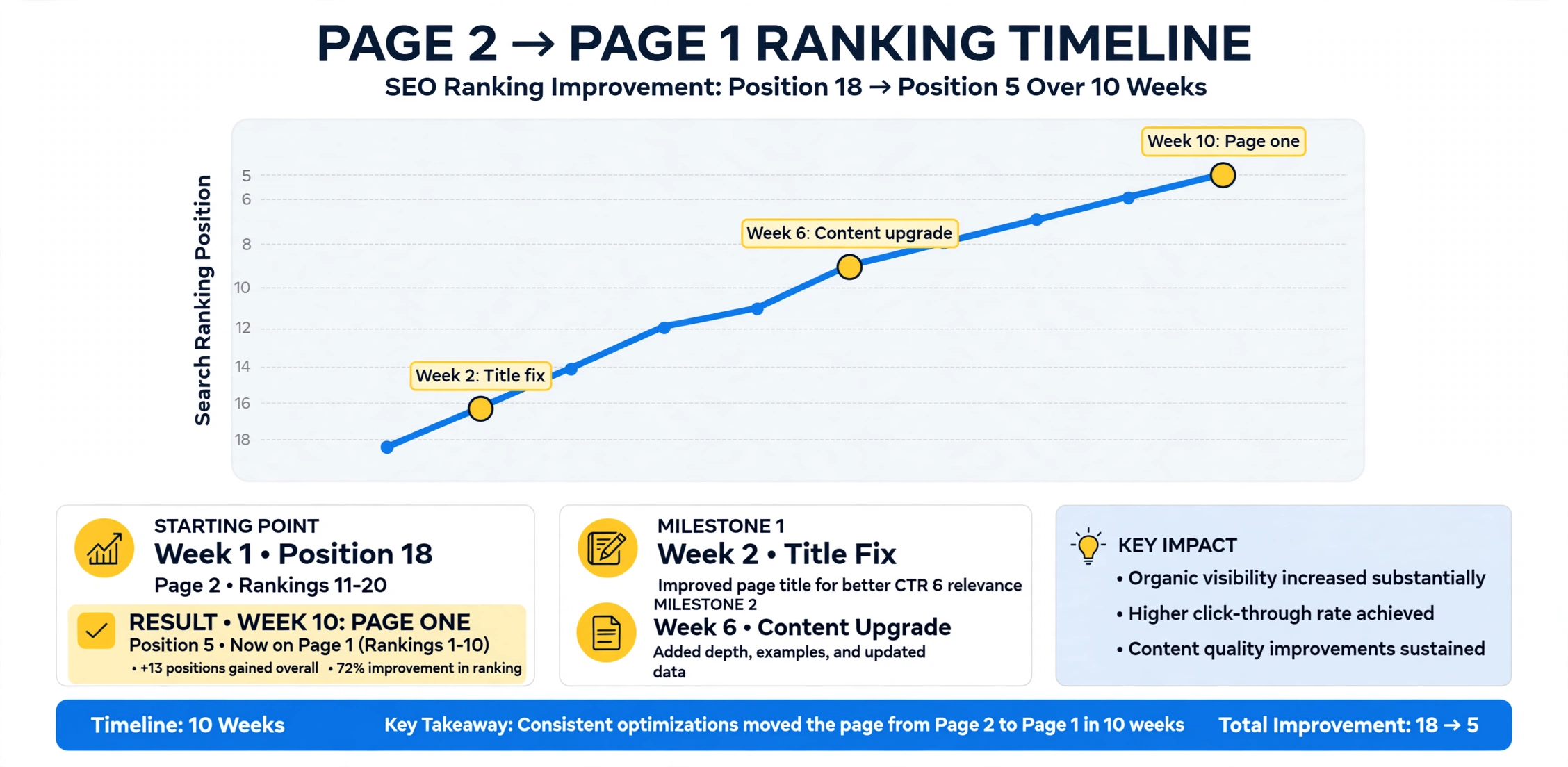
- Positions 14 to 16: 8 to 12 weeks, usually needing content upgrades plus internal links and some external links.
- Positions 17 to 20: 10 to 18 weeks, requiring the full playbook: cannibalization check, title rewrite, content upgrade, links, and engagement fixes working together.
Track weekly in Search Console, not daily. Rankings fluctuate; trends matter. If nothing moves after the expected window, re-audit: the blocker is usually intent mismatch or a bigger authority gap than estimated.
Start with Google’s SEO Starter Guide and Search Engine Journal’s local SEO guide for the full playbook.
What Is Your Fastest Path to Page One?
Your page-two list, worked in priority order: titles first, content upgrades second, internal links third, backlinks where the gap demands it. No new content until the list is exhausted. This is the highest-ROI SEO work that exists, and most businesses never do it. Our local SEO services run exactly this playbook for clients, and Local SEO Rankers tracks every position weekly.
Want your page-two keywords pushed to page one? Contact Local SEO Rankers for a free audit. We will find your fastest wins and build the push plan.
Still Have Questions About Google’s First Page?
How long does it take to move from page 2 to page 1?
Positions 11 to 13 typically move in 4 to 8 weeks with title and content improvements. Positions 16 to 20 need 10 to 18 weeks with the full playbook. Adding targeted link building accelerates every tier.
Should I create a new page or improve the existing one?
Improve the existing page in almost all cases. It already has crawl history, backlinks, and authority. Only create a new page if the existing one targets a fundamentally different search intent.
Is it better to target page 2 keywords or new keywords?
Page 2 keywords first. Moving from position 14 to 6 costs far less than ranking a new keyword from zero to 14. Exhaust your page-two list before investing in new content.
Why is my site stuck on page 2 despite better content?
Most commonly a backlink gap: pages above you have more referring domains to their specific URLs. Check the gap, then earn targeted links. Also check for cannibalization splitting your authority.
Do title tag changes really improve rankings?
They improve click-through rate, which feeds engagement signals back into rankings. For pages at positions 11 to 13, a sharper title alone often produces visible movement within weeks.
What is keyword cannibalization?
When two of your pages target the same keyword, they split authority and both rank worse. Fix it by merging the weaker page into the stronger one with a redirect.