
I fix things for a living in Leander, Texas. When a customer asks me how long a repair will take, I can look at the job and give them a straight answer. When a local business owner asks me how long does local SEO take, I wish I could do the same. I cannot, and anybody who gives you one number without asking about your business is guessing.
Here is the honest answer, the one I give people sitting across the table from me. For most local businesses, expect the first signs in a few weeks and real results, meaning calls and bookings you can count, in three to six months. In a crowded city or a tough trade like plumbing or law, give it six to twelve months. That is the planning window, not a promise. Anybody who promises page one in thirty days is lying to you.
The short answer: For most local businesses, expect the first signs in a few weeks and real results in three to six months. A new business in a competitive city can take six to nine months, and the profile clock moves in weeks while the website clock moves in months.
The answer is a range because local SEO does not run on one clock. It runs on two, and they move at different speeds.
What Does “Local SEO Results” Actually Mean?
Before we talk about time, we need to agree on what we are timing. “Local SEO results” usually means one of three different things, and each one has its own clock.
First, showing up on Google Maps, in the box of three businesses at the top of a local search, the map pack. Second, ranking your website pages for searches like “plumber in Leander”. Third, the thing that pays the bills: more calls, more direction requests, more bookings.
Rankings are not the result. They are the road to the result. I have seen businesses rank number three on Maps and still wonder where the calls are, because their profile had two reviews and no photos.
So when I say three to six months, I mean three to six months until the phone rings more than it did before.
How Long Does Local SEO Take? The Short Answer
Most local businesses see the first movement in one to three months and meaningful business results in three to six months. That is the range the industry keeps landing on, and it lines up with the data.
Google itself has said that SEOs typically need four months to a year to make improvements and then see the benefit. That was Maile Ohye, a Google staffer, in a 2017 video about hiring an SEO. It is old guidance and the line is gone from Google’s current pages, but it is still the most honest range Google has ever given.
Ahrefs ran the numbers in May 2025. They tracked one million random new pages and found that only 1.74 percent reached Google’s top 10 within a year. On a cleaner sample of two million real English pages, the figure was 6.11 percent, and the average page at number one is about five years old. That sounds brutal, and it is, for new pages chasing national keywords. But local search is a different game. You are fighting the ten other plumbers in your town, and most of them are not doing any SEO at all.
Here is the short answer by situation. A brand new business in a small town can see its profile start appearing in weeks. An established business in a mid-size city usually needs three to six months. A competitive city or a crowded trade needs six to twelve months, sometimes more. The 3 to 6 month figure is not a measured average. Nobody has measured it. It is what experienced people keep seeing, and I would rather tell you that plainly than dress it up as science.
Why Does Local SEO Run on Two Clocks?
This is the part most guides skip, and it is the part that explains everything. Local SEO has two clocks, and if you only watch one of them, you will think nothing is happening when plenty is.
Clock one is your Google Business Profile and the map pack. This clock is fast. Your profile is a listing, not a website, and Google can test it in search results quickly. Fix the categories, fill in every field, add real photos, start collecting reviews, and you can see your profile appearing for more searches within weeks. Google’s own help pages say rankings for a new business can take up to a month to appear.
Clock two is your website. Service pages and location pages take months to earn trust, because Google has to find them, understand them, and decide they beat the pages already ranking. Ahrefs found that of the new pages that do reach the top 10, about 41 percent get there within the first month, and the rest taper off through month six. After that, a page that has not moved needs real changes, not more waiting.
The profile clock matters more than most people think. Whitespark’s Local Search Ranking Factors research for 2026 puts Google Business Profile signals at about 32 percent of local pack ranking weight, the largest single group. That is why the fastest wins start with the profile, not the website.
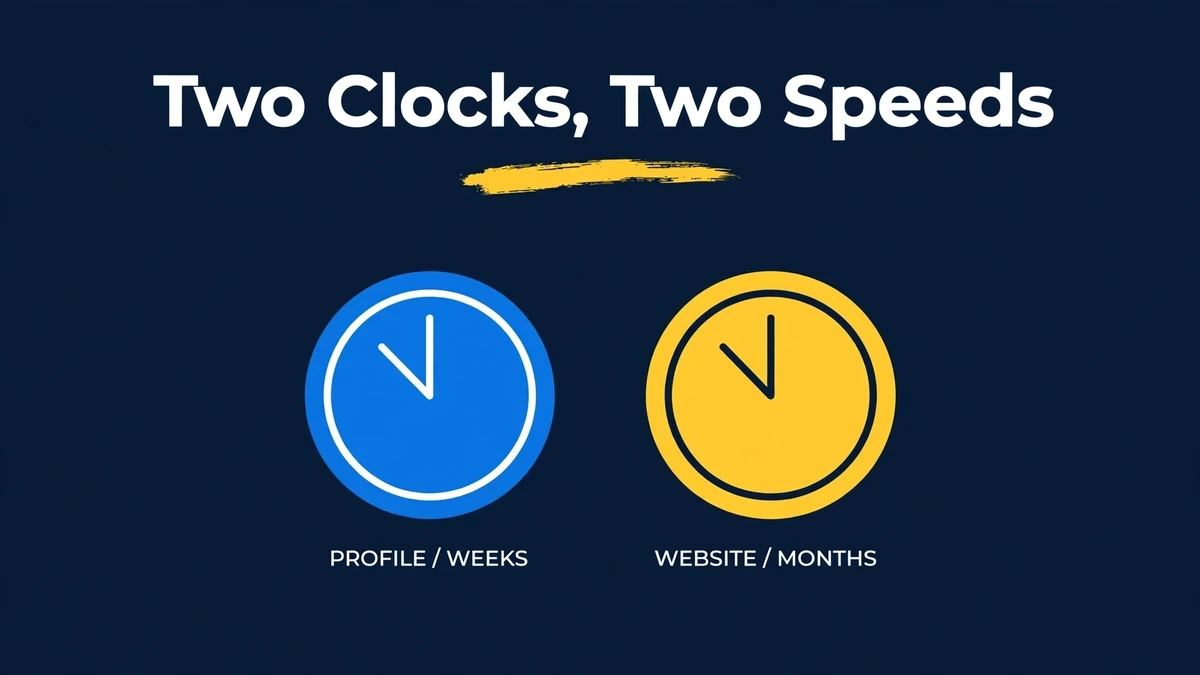
Think of it like my shop: the profile is the sign out front, the website is the workshop behind it. People see the sign first. You need both, but they do not move at the same speed, and that is normal.
If your profile is half empty right now, fixing it is the fastest work in all of local SEO. A complete profile with the right categories, real photos, and steady reviews is the foundation everything else stands on. That is what Local SEO Rankers’ Google Business Profile service handles: the profile, the photos, the posts, and the review responses.
What Happens Month by Month?
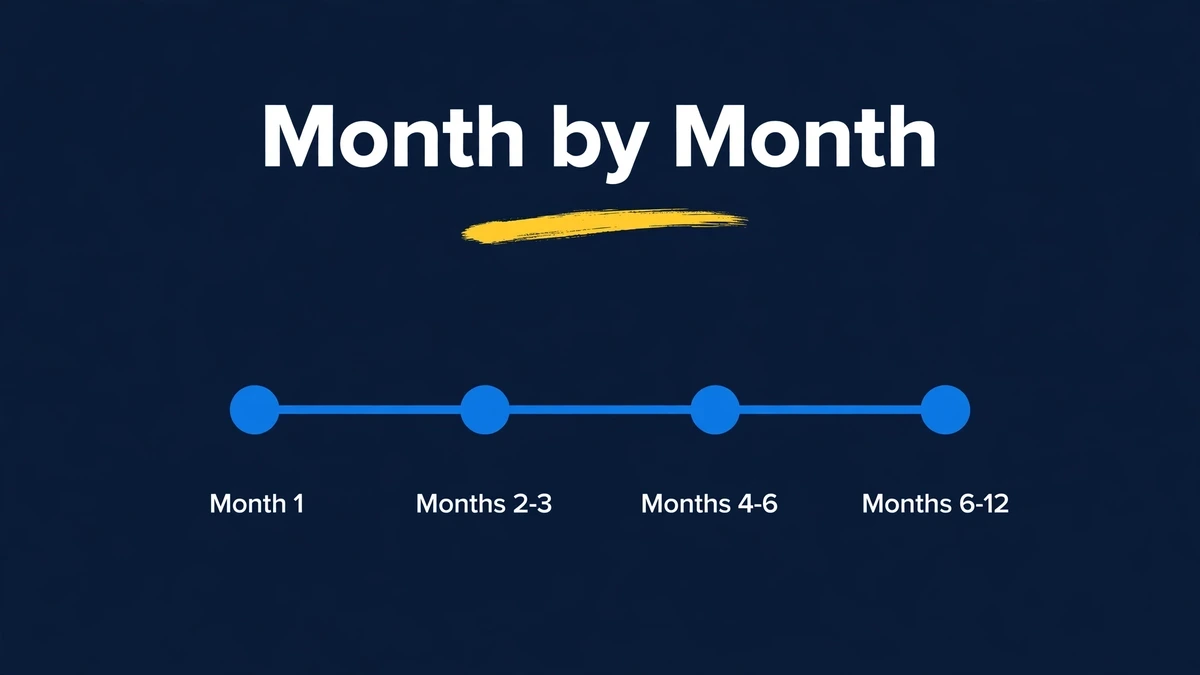
Here is what the timeline looks like for a normal local business that does the work every week and does not stop.
Month 1: foundation, and almost nothing to see
Month one is the boring month. You verify the profile, fix the categories, correct the name, address, and phone number everywhere they appear, fix the technical problems on the website, and get the service pages live. Google is crawling and indexing, and Joy Hawkins from Sterling Sky puts it plainly: it takes six to ten weeks generally for Google to index and insert a brand new listing, let alone have it rank.
What you will see in month one is almost nothing. Impressions might tick up a little. Do not panic. The work is happening under the floorboards.
Months 2 to 3: the first signs of life
This is when the profile clock starts paying. Your business starts appearing for more searches, especially your own name and very specific searches. Impressions in Search Console and profile views start climbing. In an easy market, you can show up in the map pack for some terms now.
Reviews start to matter here. A handful of genuine reviews with replies does more in month two than a hundred directory listings.
Months 4 to 6: the phone starts ringing more
This is the window where most businesses feel it. Calls, direction requests, and website clicks start tracking with the impressions, and service pages begin ranking for terms with real volume. In a mid-size market, this is when a stable spot in the top three of the map pack becomes realistic for your core terms.
If you are not seeing calls by month six in a normal market, something is wrong with the work, not with the timeline. Month six is the time to change the plan, not to quit.
Months 6 to 12: compounding, and the gap widens
Local SEO compounds. Every review, citation, and link adds to the pile. Businesses still doing the work in month nine are competing against businesses that quit in month three, and it shows.
Does a New Business Take Longer Than an Established One?
Yes, and the difference is bigger than most people expect. BrightLocal asked 18 respected local search experts how long it takes to rank, and the answers are the best data we have, because they come from people who do this every day.
| Your situation | First movement | Steady leads | What decides it |
|---|---|---|---|
| New business, small town | 4 to 8 weeks | 3 to 6 months | Low competition, complete profile |
| New business, competitive city | 2 to 3 months | 6 to 9 months | Strong competitors, review gap |
| Established business, good website | 1 to 2 months | 3 to 6 months | Existing trust, reviews, links |
| Established business, poor website | 3 months or more | 6 to 12 months | Fixes first, then rankings |
The numbers behind the table come from BrightLocal’s expert survey. For a brand new business in a competitive market, 78 percent of the experts said significant rankings are achievable in three to nine months, and half said six to nine months is enough. In a non-competitive market, every expert agreed it could be done within nine months, and 94 percent said within six months.
For a business that already has a website, 61 percent said three to six months, and 22 percent said under two months. But if the website is poorly optimised, 89 percent said it takes longer than three months, because you have to fix the foundations first.
The lesson is simple. A new business starts with zero trust, and trust is what Google measures. An established business starts halfway up the hill. If you are brand new, compare your month three with your month one, not with a competitor’s year three.
If you are starting from scratch, Local SEO Rankers’ local SEO service builds the foundation right the first time: profile, website, and citations, in the order that gets you moving fastest.
What Makes Local SEO Faster or Slower?
Five things decide whether you land at the fast end or the slow end. You control four of them.
What speeds it up
- A complete profile. Every field filled, the right primary category, real photos of your work, your actual hours.
- Reviews coming in steadily. A few genuine reviews every month, with a reply to each one.
- Consistent business details everywhere. The same name, address, and phone number on your website, your profile, and every directory.
- Local content that answers real questions. Service pages for what you do, in the places you do it, written for customers, not for robots.
- A quiet market. If the businesses above you have ten reviews and no website, you can pass them in weeks.
What slows it down
- A brand new domain. No history, no links, no trust yet. It has to be earned month by month.
- A competitive trade in a big city. Plumbers, lawyers, and dentists in a metro area fight businesses with hundreds of reviews and years of links.
- Inconsistent details. An old address on one directory and a new one on another tells Google you might be two different businesses.
- No reviews, or fake ones. Fake reviews can get a profile suspended.
- Stopping and starting. Work done in month one and abandoned in month three fades. BrightLocal’s survey found the first significant drop in rankings comes three to six months after optimisation stops.
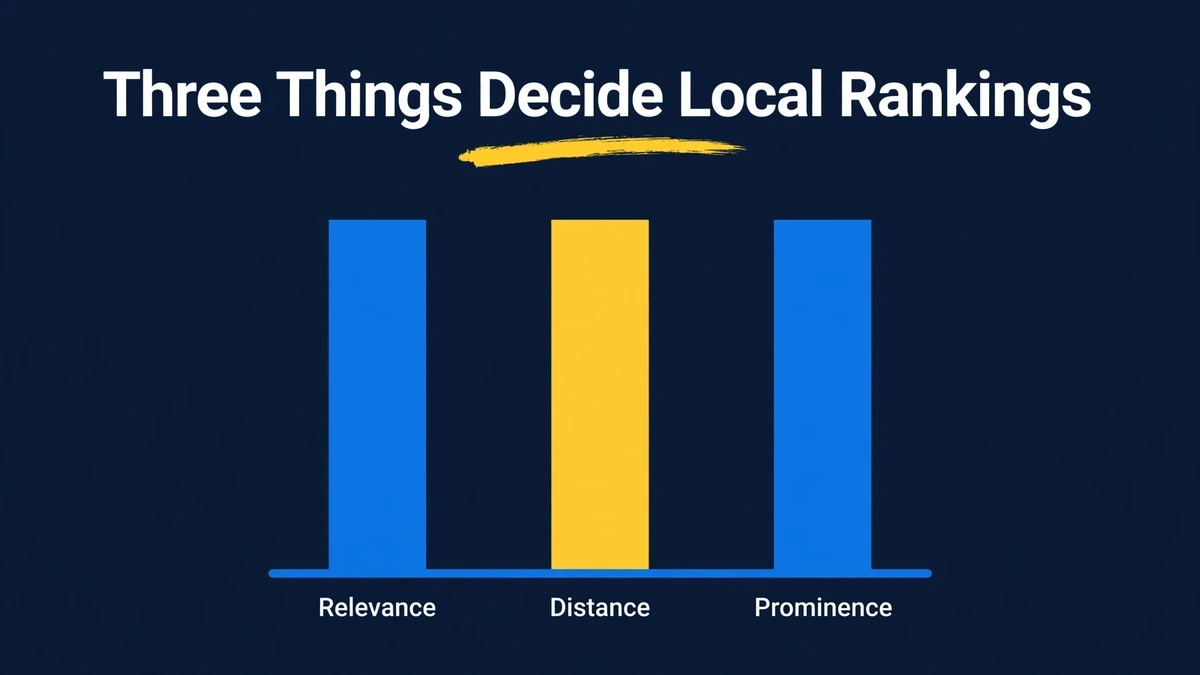
Google’s own explanation of local ranking is short: local results are based mainly on relevance, distance, and prominence. Relevance is how well your business matches the search. Distance is how far you are from the searcher. Prominence is how well known your business is, built from reviews, links, citations, and mentions. You cannot move your shop closer to every customer. You can be more relevant and more prominent, and that is the whole job.
Citations are part of prominence, and one of the easiest things to get wrong. A citation is a mention of your business name, address, and phone number on another site. When they all match, they confirm you are real. When they do not, they muddy the picture. Local SEO Rankers’ citations and link building service builds consistent, quality citations and real local links, not the 500-directory blasts that create more mess than they fix.
What Does Google Itself Say About Timelines?
Google is careful with its words on timelines, so listen to what it actually says.
Google’s SEO Starter Guide says some changes might take effect in a few hours, others could take several months, and it suggests waiting a few weeks before deciding whether a change helped. That is the official line, and it is deliberately vague, because Google knows every site is different.
For local businesses specifically, Google’s Business Profile help gives real numbers. Verification reviews take up to five business days. After you edit your business information, changes can take up to three days to appear, and some edits are reviewed and can take up to thirty days. Rankings for a new business can take up to a month to appear. Those are Google’s own timings, and they explain why the first month feels so quiet.
Then there is the Ahrefs data, the closest thing we have to a measured answer for website pages. Only 1.74 percent of one million random new pages reached the top 10 within a year. Almost three quarters of the pages in the top 10 are more than three years old, and the average number one page is five years old. Read that the right way: it warns against chasing national keywords with a brand new page, not against local SEO. A local service page is competing with the other shops on your street, and most of them never did the work.
Put Google and Ahrefs together and the picture is consistent: the profile moves in weeks, the website in months, the business feels it in three to six.
How Do You Know If It Is Working?
Here is what to watch, and when.
In months one to three, watch impressions and profile views, not rankings. If more people are seeing your profile and your pages are showing up in Search Console, the engine is turning over. A flat line here means something is broken: a verification problem, a suspension, a page Google cannot crawl, or a wrong category.
In months four to six, watch calls, direction requests, and form fills. These are the numbers that pay for the work. If impressions are climbing but calls are not, the problem is usually the profile itself: weak photos, few reviews, or no posts.
After six months in a normal market, you should be able to point at real business: more calls than before you started, more bookings, a steady place in the map pack for your main terms. If you cannot, change the plan. More of the same work that moved nothing in six months is not patience, it is a rut.
And watch for red flags: an agency that guarantees page one in thirty days, or one that sends no reporting at all. A real timeline comes with real numbers every month.
What About AI Search? Does Local SEO Still Matter There?
Customers are not only searching on Google any more. They ask ChatGPT, they read Perplexity, they skim the AI Overviews at the top of the results page. Does that change how long local SEO takes? No. It changes what the work is for.
AI engines do not rank your website the way Google does, and they have no local pack with a timeline you can watch. What they do is pick sources they can understand and trust, then name them in the answer. The things that make an AI engine cite your business are the same things that make Google rank it: consistent business details everywhere, real reviews, local mentions, and content that answers real questions in plain words.
That is AEO, answer engine optimisation, and GEO, generative engine optimisation. In plain words: making your business easy for an AI to describe correctly. A clear FAQ, schema markup that matches what visitors see, and the same details on every directory are the raw material AI answers are built from. A business with thin content and inconsistent details does not get cited, no matter how old its domain is.
So the timeline does not change, but the payoff doubles. The same three to six months of profile work, reviews, citations, and local content that gets you into the map pack also gets you named in AI answers, where a growing share of customers now make their first decision, before they ever click a link.
That is what Local SEO Rankers’ AEO and GEO service does: it builds your business into the answers ChatGPT, Perplexity, and Google AI Overviews give, with schema, FAQ content, and monthly tracking.
How Can You Speed Local SEO Up Without Getting Burned?
You cannot buy time, but you can stop wasting it. Do the fast things first and do them properly.
Complete the profile on day one: every field, real photos, correct categories. Ask your ten happiest customers for a review this week. Fix the name, address, and phone number everywhere it appears. Get the main service pages live. Those four moves are the fastest honest progress in local SEO.
Do not buy shortcuts. Fake reviews can get your profile suspended, and a suspension costs more time than the reviews ever saved. Spam citations create inconsistent details that slow everything down. Anybody selling “guaranteed first page in 30 days” is selling a ranking for a keyword nobody searches, or a trick Google will catch.
The businesses that win local search are rarely the ones that worked hardest in month one. They are the ones still doing the work in month six. A few reviews every month, a post now and then, a photo of real work, a reply to every customer: that steady rhythm builds prominence, and prominence is what Google rewards.
Frequently Asked Questions
How long does local SEO take for a new business?
In a small town, first movement in four to eight weeks, steady leads in three to six months. In a competitive city, expect six to nine months.
How long does it take to rank on Google Maps?
Google says rankings for a new business can take up to a month to appear. In practice, expect early movement in 30 to 90 days and a stable top-three spot in three to six months.
Can local SEO work in 30 days?
You can see first signs in 30 days: a verified profile, impressions rising, a few new reviews. Real leads in 30 days are rare, and anyone guaranteeing them is selling you something.
Why is my Google Business Profile not showing up yet?
Usually verification, a review of your edits, or indexing time. Verification takes up to five business days, edits up to three days, some up to 30 days.
How long does it take for reviews to help rankings?
Reviews help as they arrive, but the effect builds over time. A steady flow over two to three months moves a profile more than a single burst of ten in one week.
Does local SEO stop working if I stop paying?
Not at once. Very little changes in the first one to two months, but the first significant drop in rankings usually comes three to six months after optimisation stops.
How long does it take to rank a new website page locally?
For a local service page, expect first movement in one to three months and a solid ranking in three to six. National keywords take far longer.
Is 3 to 6 months a guarantee?
No. It is a planning window based on expert surveys and agency experience, not a measured average. Your market, your competition, and how steady the work is decide where you land in it.
What is the fastest local SEO win?
Completing your Google Business Profile properly and getting your first ten genuine reviews. Profile signals are the largest single group of local pack ranking factors, about 32 percent.
How long does local SEO take in a competitive city?
Six to twelve months, sometimes more. BrightLocal’s experts said only 11 percent of new businesses in competitive markets rank significantly in under three months.
Bottom Line: Give It Six Months, Judge It on Calls
How long does local SEO take? Weeks for the first signs, three to six months for results you can feel, six to twelve in a crowded market. That is the honest timeline, from Google, from Ahrefs, and from eighteen local search experts.
Give it six months of steady work. Judge it on calls and bookings, not on one ranking screenshot. And if somebody promises you the top of Google in thirty days, walk away. A good mechanic tells you how long the job really takes, even when the truth is slower than you hoped.
If you want the work done properly, and tracked every month so you always know where you stand, that is what I do. Reach me on WhatsApp at +92 336 0378683, email hello@localseorankers.com, or visit localseorankers.com and tell me your town and trade. I will tell you straight how long it should take for you.