Two pages with equally good content. One ranks first, the other ranks fifteenth. The difference, more often than not, is backlinks.
Link building is the art of earning those links: getting other websites to vouch for yours. Done right, it is the most powerful ranking lever in SEO. Done wrong, it is the fastest way to get penalized. Here is the complete beginner’s guide.
The short answer: Link building is the process of earning backlinks (links from other sites to yours) authority and rankings. Get backlinks by creating link-worthy content like original research and tools, doing digital PR, fixing broken links, reclaiming unlinked mentions, and guest posting selectively. Never buy links or join link schemes.
What Is Link Building?
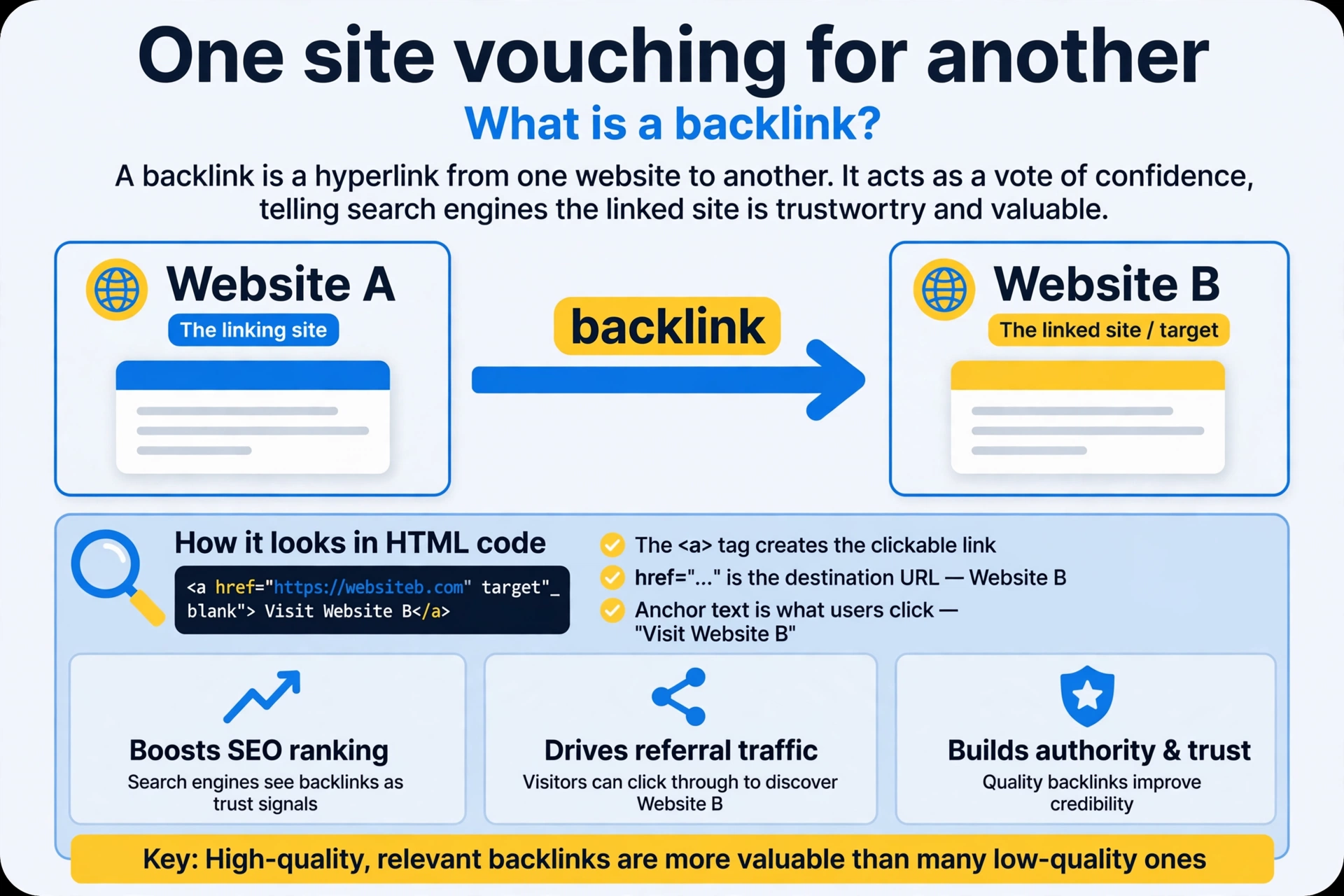
Link building is the ongoing process of earning hyperlinks from other websites pointing to your own. Each of those inbound links is called a backlink. The distinction matters: backlinks are the assets, link building is the work of earning them.
Why would another site link to you? Because your content helps their readers: a statistic worth citing, a guide worth recommending, a tool worth sharing. Every legitimate backlink is, at its core, an editorial decision by a human that your page deserves attention. That human judgment is exactly what Google is trying to measure.
Why Do Backlinks Still Matter?
Google has confirmed that links remain among its top ranking signals. Pages ranking first average several times more backlinks than pages in positions two through ten, and top pages keep accumulating referring domains faster than lower ones. The correlation is stubborn and persistent.
What changed is the standard. Google has publicly said link volume matters less than it used to, and quietly downgraded links in its documentation language. The links that move rankings now are the ones with real editorial judgment behind them: a journalist citing your data, a blogger recommending your guide. Mass-produced links do not move the needle; earned ones do.
Can I rank without backlinks? For low-competition keywords, yes. For anything competitive, backlinks are nearly always the deciding factor between good content that ranks and good content that does not.
What Makes a Backlink High Quality?
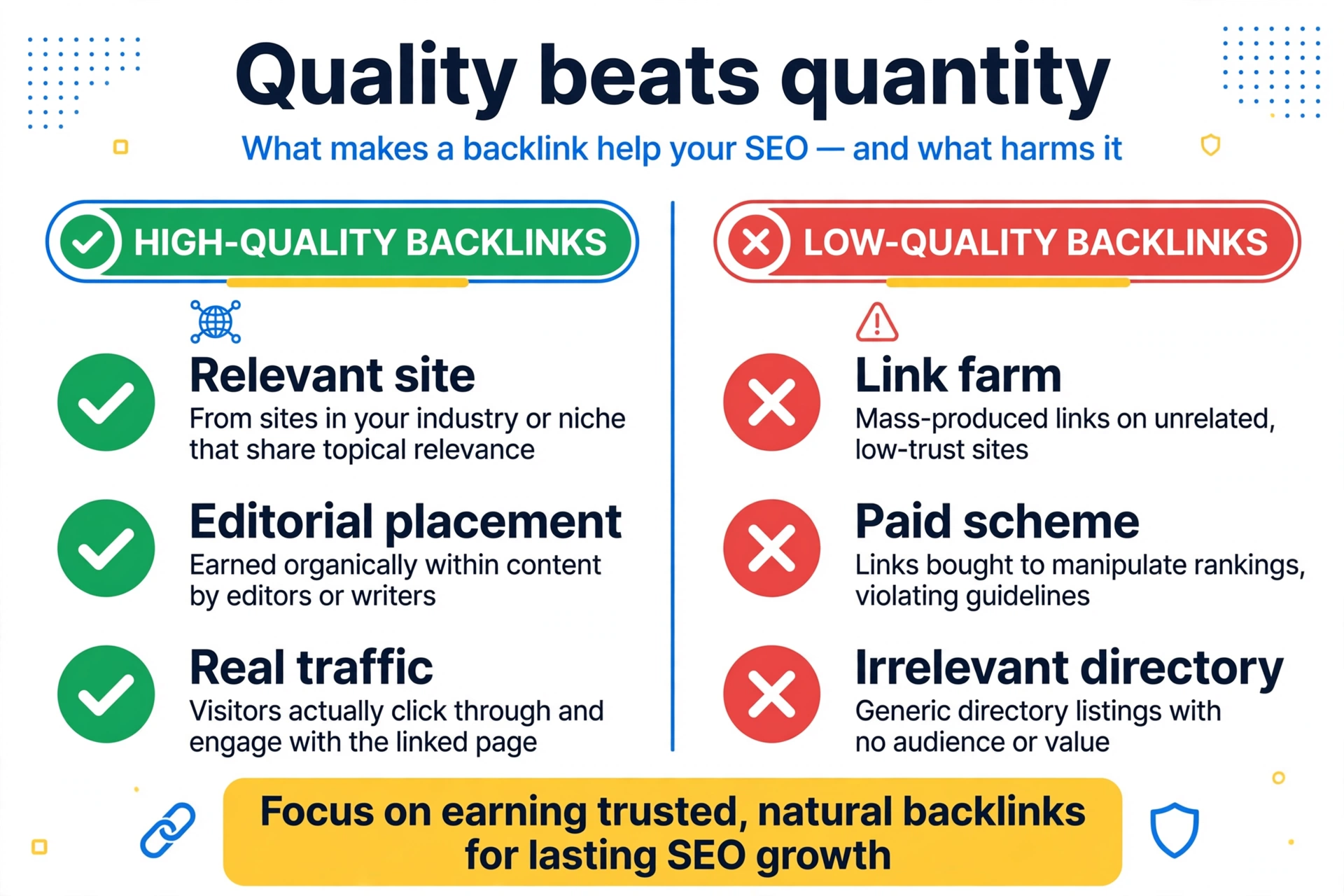
Not all links are equal. A single link from a respected industry publication can outweigh a hundred directory listings. Judge every potential link on these signals:
- Relevance: a plumbing blog linking to your plumbing guide beats a generic directory. Topical match is the strongest quality signal.
- Editorial placement: a link an editor chose to include in content beats a link you placed yourself in a comment or profile.
- Trust: established sites with real traffic and reputations pass more value than unknown or spammy ones.
- Traffic: links from pages people actually visit send referral visitors too, which is value beyond SEO.
- Natural anchors: varied, natural anchor text. Dozens of identical exact-match anchors look manipulated.
Internalize this: relevance beats authority, and editorial beats everything. One genuinely earned link from the right site outperforms any quantity of manufactured ones.
How Do You Create Content Worth Linking To?
Outreach without something worth linking to is just spam with extra steps. Before any campaign, build at least one linkable asset: content so useful that linking to it is the natural thing to do.
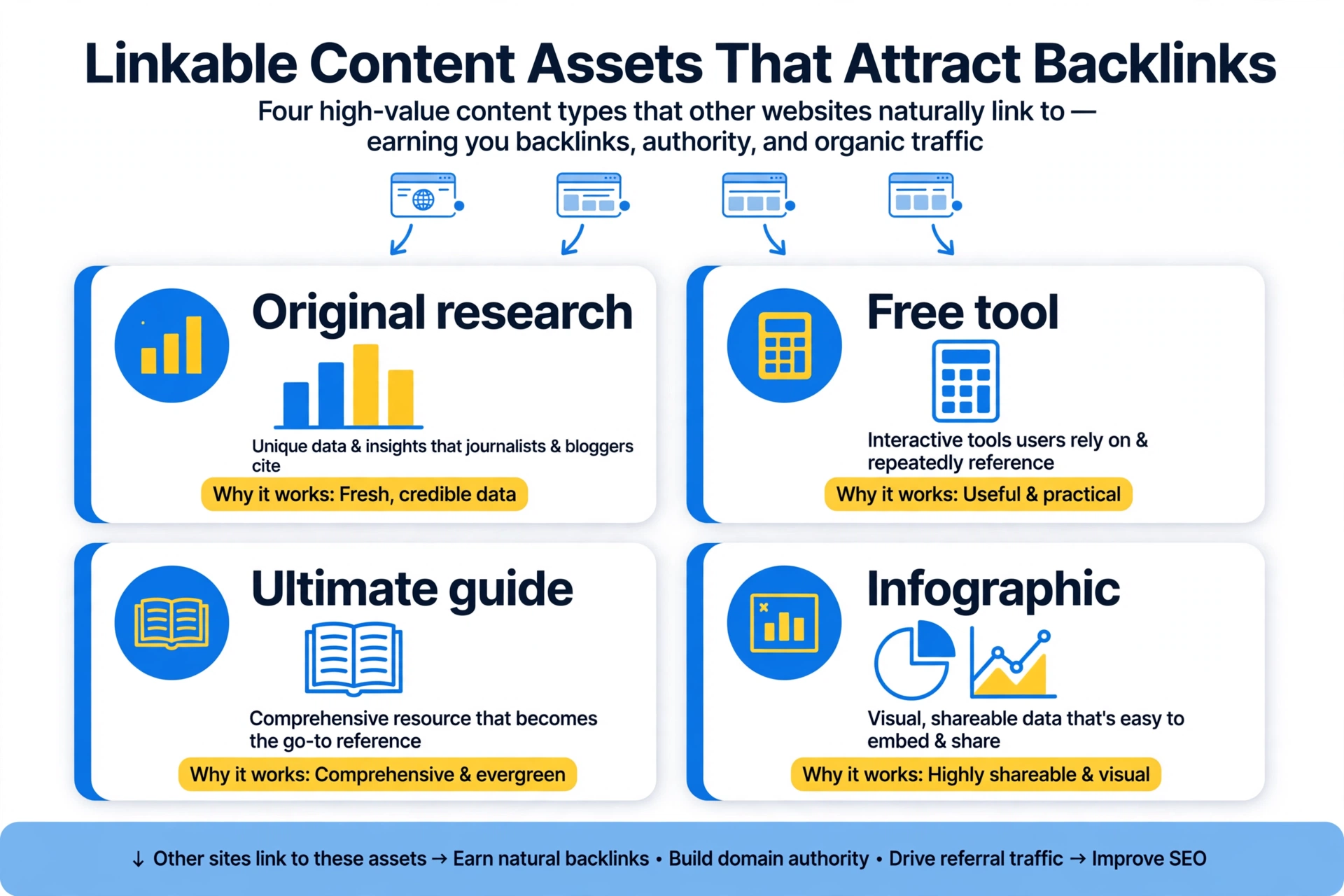
The formats that earn links most reliably:
- Original research: survey your customers, analyze your data, publish the findings with charts. Data gets cited for years.
- Free tools and calculators: a useful tool earns links on autopilot from everyone who recommends it.
- Comprehensive guides: the definitive resource on a narrow topic becomes the page everyone references.
- Visual assets: original infographics and diagrams get embedded with credit links.
- Strong opinions: a well-argued contrarian take earns links from both supporters and critics.
Audit what you already have first. Most businesses own at least one page with original data or a strong viewpoint and never realized it was link-worthy. Start there before creating anything new.
What Are the Best Ways to Earn Backlinks?
With linkable content ready, these are the tactics that work in 2026, in rough priority order:
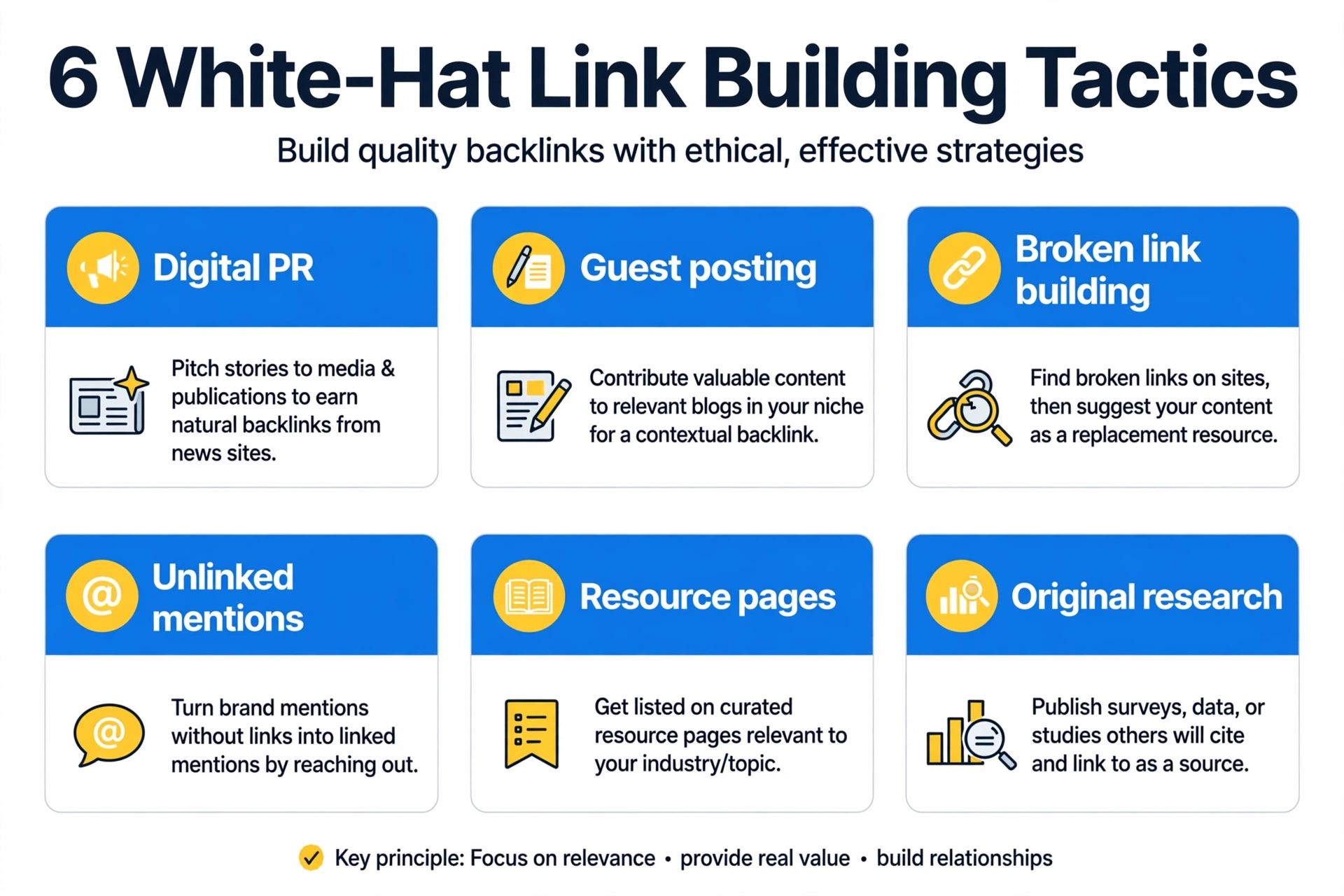
Digital PR
Pitch data-driven stories to journalists through platforms like Connectively, Qwoted, and Featured. A reporter quoting you as a source earns links from real news outlets. This is the fastest legitimate path to authoritative links.
Unlinked mention reclamation
Search for your brand name without link filters. Sites that mention you without linking already decided you were worth naming; a polite email asking for the link converts at remarkable rates. The easiest links you will ever earn.
Broken link building
Find dead links on resource pages in your niche, recreate or identify better content on your site, and suggest your page as the replacement. You are doing the site owner a favor, which is why this works.
Guest posting, done right
Write genuinely good articles for publications your audience actually reads, with natural links back to your resources. Selectivity is everything: skip the “write for us” link farms that accept anything.
Resource page outreach
Find curated resource lists in your niche and suggest your genuinely useful asset for inclusion. Keep pitches short, specific, and honest about why it fits.
Competitor link gaps
Use a backlink tool’s link intersect feature to find sites linking to multiple competitors but not you. These sites already link to businesses like yours; they are warm prospects.
What Tactics Should You Avoid?
The shortcuts are well-marked and well-punished:
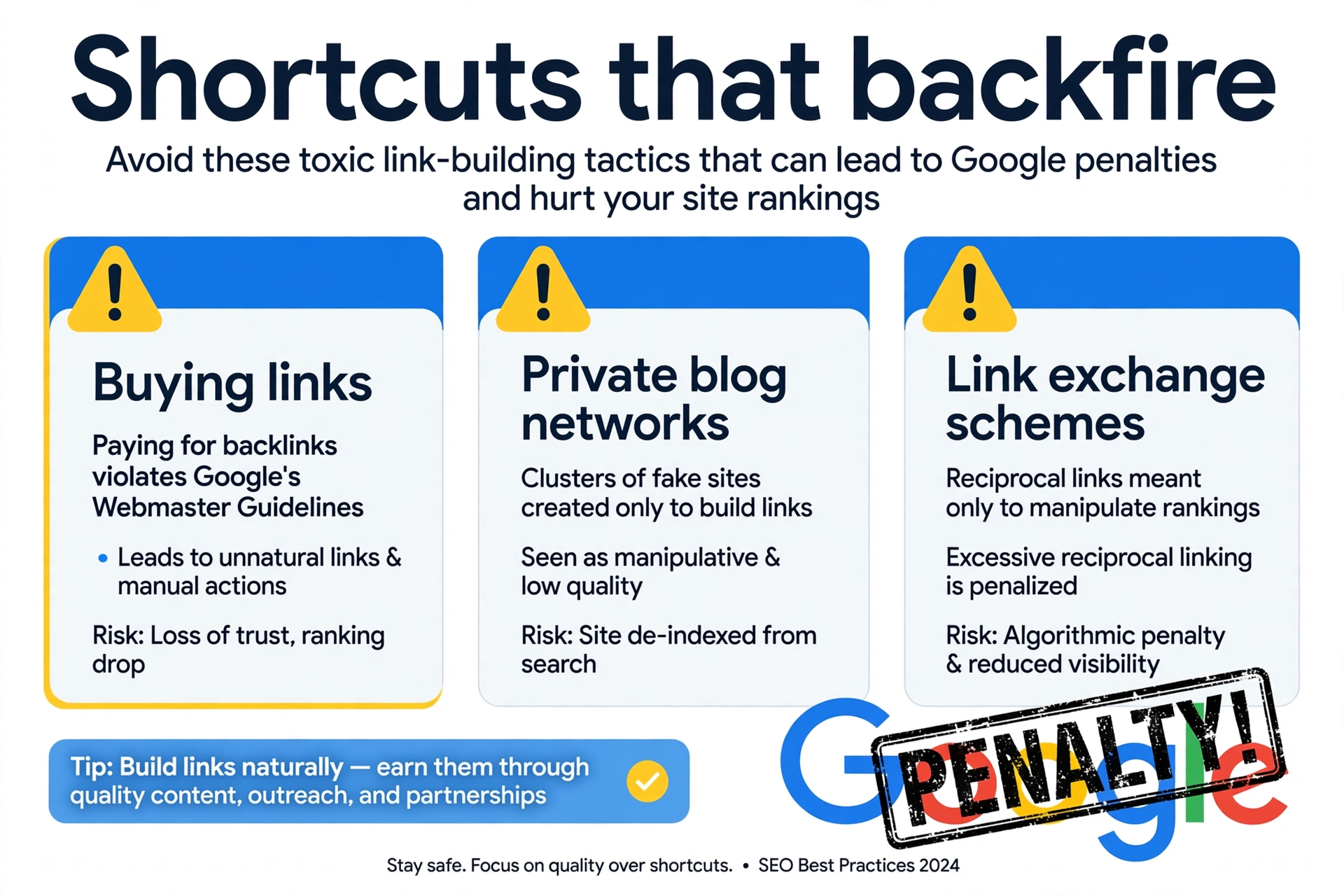
- Buying links: paid link schemes violate Google’s guidelines. Google’s spam detection has grown extremely sophisticated, and penalties can erase years of progress.
- Private blog networks (PBNs): networks of sites built solely to sell links. Short-term gains, long-term disaster when discovered.
- Link exchanges: “I’ll link to you if you link to me” schemes are easy for Google to detect at scale.
- Mass directory submissions: irrelevant directories add nothing and can look manipulative in bulk.
- Automated spam: comment spam, forum spam, and automated outreach blasts damage your brand and your rankings.
The test is simple: would you want this link if search engines did not exist? If yes, it is probably legitimate. If the only reason is SEO, reconsider.
How Long Does Link Building Take?
Longer than you want, faster than you fear. Give any single tactic a two to three month window before judging it. Links arrive in bursts rather than a steady drip: one digital PR hit can land five links in a week, then nothing for a month.
Track referring domains per month, not total links, and watch rankings for the specific pages you are building toward. Link building compounds: each quality link makes the next one easier to earn, because your content looks more credible to the next person you pitch.
Stay on the right side of Google’s spam policies, and build on Google’s SEO Starter Guide.
What Is Your First Link Building Move?
Start where the friction is lowest: audit your existing content for something link-worthy, reclaim your unlinked brand mentions, and pitch one journalist query this week. Then build the habit. Link building rewards the consistent, not the clever. Local SEO Rankers runs ethical link building for clients, and our local SEO services include full off-page strategy.
Want quality backlinks without the risk? Contact Local SEO Rankers for a free audit. We will analyze your link profile, find the gaps, and build you a safe earning strategy.
Still Have Questions About Link Building?
What is the difference between link building and backlinks?
Backlinks are the individual links pointing to your site. Link building is the ongoing process of earning those links. One is the asset, the other is the work.
How many backlinks do I need to rank?
There is no fixed number. It depends on the competition for your specific keywords. Compare referring domains to the pages ranking above you for your target keyword; your goal is to close that gap with quality, not hit an absolute count.
Is buying backlinks safe?
No. Buying links violates Google’s guidelines and risks manual penalties that can erase years of progress. Earn links through value: research, PR, and genuine outreach.
What is the fastest legitimate way to get backlinks?
Digital PR: pitch original data or expert commentary to journalists through platforms like Connectively or Qwoted. Reclaiming unlinked brand mentions is even faster for links you have already half-earned.
Do backlinks still matter in 2026?
Yes. Links remain among Google’s top ranking signals. What changed is the standard: editorially earned, relevant links matter more than ever, while mass-produced link volume matters less.
How long until new backlinks affect rankings?
Typically weeks to a few months after Google discovers and indexes the linking page. Give any tactic a two to three month window before judging results.